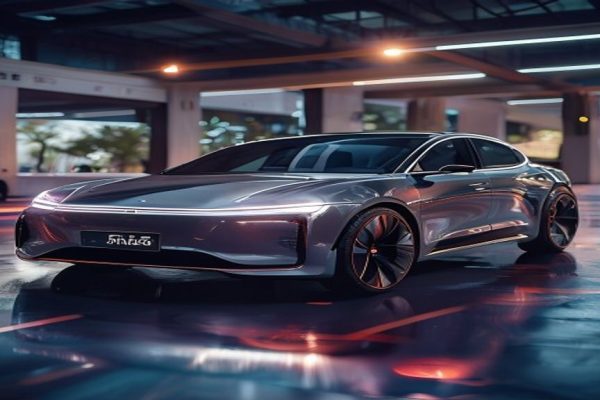
Chinese Electric Cars and Autonomous Driving: The Conversation Begins
Xinzhou Wu, a prominent figure in the Chinese automotive industry, has recently sparked a heated debate about the future of electric cars and autonomous driving. In a candid interview, Wu shared his thoughts on the role of autonomy in the transportation sector, the importance of Chinese electric cars, and the need for lidar technology. As the world grapples with climate change, sustainability, and the rise of smart cities, Wu’s insights offer a glimpse into the evolving landscape of the automotive industry.
Autonomy in Transportation: What Does the Future Hold?
The concept of autonomous driving has been gaining traction in recent years, with many tech giants and automotive manufacturers investing heavily in research and development. Wu believes that autonomy will play a crucial role in shaping the future of transportation, particularly in urban areas. ‘Autonomous vehicles will revolutionize the way we think about mobility,’ he said. ‘Imagine a world where cars can drive themselves, reducing congestion, emissions, and accidents. It’s a future we can’t afford to ignore.’
However, Wu also emphasized the need for a more nuanced approach to autonomy. ‘We can’t just focus on the technology; we need to consider the social and economic implications,’ he said. ‘Autonomous vehicles will create new job opportunities, but they’ll also displace some existing ones. We need to be prepared for this shift and invest in retraining programs for workers in the automotive industry.’
The Rise of Chinese Electric Cars: A Game-Changer in the Industry?
China has emerged as a global leader in the electric vehicle (EV) market, with companies like BYD, Geely, and NIO making significant strides in innovation and production. Wu believes that Chinese electric cars will play a crucial role in shaping the future of transportation. ‘Chinese companies are at the forefront of electric vehicle technology,’ he said. ‘We’re not just talking about cars; we’re talking about a whole new ecosystem that includes charging infrastructure, battery technology, and smart mobility solutions.’
Wu also highlighted the importance of government support in promoting the adoption of electric vehicles. ‘The Chinese government has been instrumental in driving the transition to electric vehicles,’ he said. ‘Their policies and incentives have created a favorable environment for EV manufacturers to innovate and grow.’
The Need for Lidar Technology: A Crucial Component in Autonomous Driving
Lidar technology, which uses light to measure distances and create high-resolution 3D maps, is seen as a crucial component in the development of autonomous vehicles. Wu believes that lidar will play a vital role in enabling cars to navigate complex environments and avoid obstacles. ‘Lidar is essential for the development of autonomous vehicles,’ he said. ‘It provides a level of accuracy and precision that’s hard to achieve with other sensors.’
However, Wu also acknowledged the challenges associated with lidar technology, including cost and size. ‘Lidar is still an expensive and bulky technology,’ he said. ‘We need to make it more affordable and compact before it can be widely adopted.’
In conclusion, Xinzhou Wu’s insights offer a glimpse into the evolving landscape of the automotive industry. As the world grapples with climate change, sustainability, and the rise of smart cities, Wu’s thoughts on autonomy, Chinese electric cars, and lidar technology provide a compelling argument for the need for innovation and collaboration in the transportation sector.
Wu’s comments also highlight the importance of government support in promoting the adoption of electric vehicles. ‘The Chinese government has been instrumental in driving the transition to electric vehicles,’ he said. ‘Their policies and incentives have created a favorable environment for EV manufacturers to innovate and grow.’
The conversation between Wu and Patel serves as a reminder that the future of transportation is not just about technology; it’s about people, policy, and innovation. As the industry continues to evolve, one thing is clear: the future of transportation will be shaped by the intersection of autonomy, sustainability, and innovation.
**Key Takeaways:**
- Autonomy will play a crucial role in shaping the future of transportation.
- Chinese electric cars will be a game-changer in the industry, driven by government support and innovation.
- Lidar technology is essential for the development of autonomous vehicles, but it needs to be made more affordable and compact.
- The industry needs to invest in retraining programs for workers in the automotive sector.
**Image Prompt:** A futuristic cityscape with autonomous electric cars driving on the roads, surrounded by towering skyscrapers and neon lights. The cars are equipped with lidar sensors and are navigating through the city with ease, highlighting the potential of autonomy and sustainability in transportation.






Leave a Reply