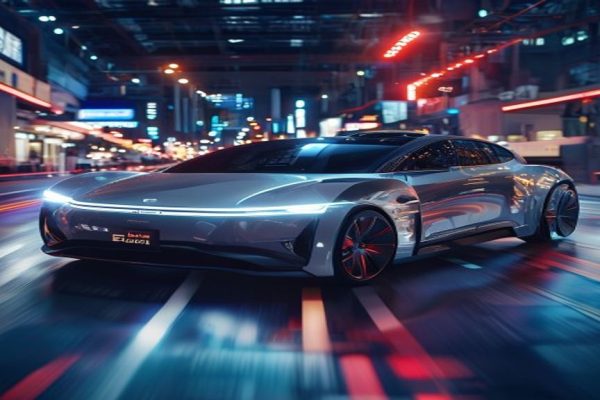
The Future of Autonomous Cars: Expert Weighs in on Lidar, Chinese Innovation, and the Path to Self-Driving
The autonomous vehicle (AV) industry has been rapidly evolving over the past decade, with numerous players vying for dominance in the market. Among the key players, Chinese companies have been making significant strides in recent years, with some experts predicting that China will play a leading role in the development of autonomous cars. In this article, we’ll explore the current state of autonomous cars, the role of lidar technology, and the insights of experts like Xinzhou Wu on the future of the industry.
The Rise of Autonomous Cars
Autonomous cars have been a topic of interest for several years, with many countries investing heavily in research and development. The technology has come a long way since the early days of self-driving vehicles, with significant advancements in sensors, software, and computing power. Today, autonomous cars are being tested and deployed in various parts of the world, with some companies already offering ride-hailing services using autonomous vehicles.
One of the key technologies driving the development of autonomous cars is lidar (light detection and ranging). Lidar uses laser light to create high-resolution 3D maps of the environment, which is essential for autonomous vehicles to navigate safely. However, lidar has also been a topic of debate, with some experts questioning its necessity in the development of autonomous cars.
Xinzhou Wu’s Insights on Lidar and Autonomous Cars
Recently, Xinzhou Wu, a renowned expert in autonomous vehicles, shared his thoughts on the role of lidar in the development of autonomous cars. In an interview, Wu emphasized the importance of lidar in creating high-resolution 3D maps, but also highlighted some of the challenges associated with the technology.
“Lidar is a crucial technology for autonomous vehicles, but it’s not the only solution,” Wu said. “We need to consider other sensors and technologies that can provide similar information without the high cost and complexity of lidar.”
Wu’s comments are a reflection of the ongoing debate in the autonomous vehicle industry about the role of lidar. While some companies are betting heavily on lidar, others are exploring alternative solutions that can provide similar functionality at a lower cost.
Chinese Innovation in Autonomous Cars
China has been making significant strides in the development of autonomous cars, with numerous companies investing heavily in research and development. Some of the key players in the Chinese AV market include Baidu, Alibaba, and Tencent, which have been working on various autonomous vehicle projects.
The Chinese government has also been supporting the development of autonomous cars, with various initiatives aimed at promoting innovation and investment in the sector. The country’s autonomous vehicle industry is expected to grow significantly in the coming years, with some experts predicting that China will become a leader in the global AV market.
The growth of the Chinese autonomous vehicle industry is driven by a combination of factors, including government support, investment, and innovation. Chinese companies have been able to leverage their expertise in areas like artificial intelligence and machine learning to develop advanced autonomous vehicle technologies.
The Future of Autonomous Cars
The future of autonomous cars is uncertain, with numerous challenges and obstacles still to be overcome. However, experts like Xinzhou Wu are optimistic about the potential of the technology to transform the transportation industry.
“Autonomous cars have the potential to revolutionize the way we travel,” Wu said. “We need to continue investing in research and development to overcome the challenges and make autonomous cars a reality.”
The development of autonomous cars is a complex and multifaceted process that requires the collaboration of various stakeholders, including governments, companies, and experts like Xinzhou Wu. While there are still many challenges to be overcome, the potential rewards of autonomous cars make it an exciting and rapidly evolving industry.
In conclusion, the future of autonomous cars is bright, with Chinese innovation playing a significant role in the development of the technology. The debate around lidar and other sensors is ongoing, but experts like Xinzhou Wu are optimistic about the potential of autonomous cars to transform the transportation industry.
Key Points:
- Autonomous cars are rapidly evolving, with numerous companies investing in research and development.
- Lidar is a crucial technology for autonomous vehicles, but its necessity is being debated.
- Chinese companies are making significant strides in the development of autonomous cars, with government support and investment driving growth.
- Experts like Xinzhou Wu are optimistic about the potential of autonomous cars to transform the transportation industry.
Image Prompt:
“An autonomous vehicle driving on a highway, with a lidar sensor mounted on the roof. The vehicle is surrounded by a 3D map of the environment, created using lidar data. The image should convey a sense of innovation and futuristic technology, with a focus on the autonomous vehicle and its surroundings.”






Leave a Reply