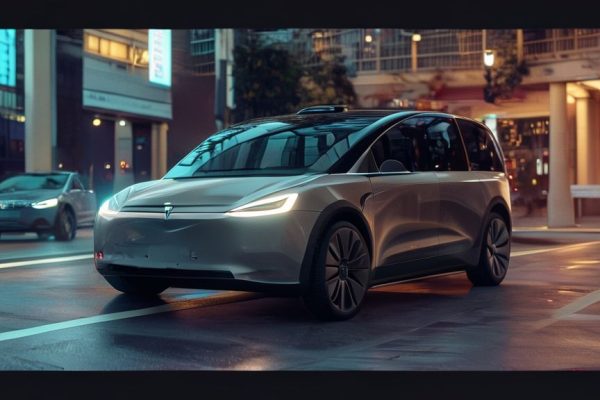
Tesla’s Ambitious Plan for Autonomous Driving
Tesla’s recent announcement that its robotaxis will be unsupervised has sent shockwaves throughout the tech and automotive industries. The move is seen as a significant milestone in the development of autonomous driving technology, but it also raises concerns about safety and regulatory compliance.
Elon Musk, Tesla’s CEO, celebrated the achievement, stating that it marked a major step forward in the company’s mission to revolutionize transportation. However, the practical implications of the development remain unclear, with many experts questioning how many people will be able to ride in Tesla’s unsupervised robotaxis in the immediate future.
The Road to Autonomous Driving
Tesla’s journey towards autonomous driving has been a long and arduous one, spanning several years and numerous setbacks. The company has faced intense competition from other tech giants, including Waymo and Uber, which have also been actively developing their own autonomous driving technologies.
Despite the challenges, Tesla has made significant progress in recent years, with its Autopilot system becoming increasingly sophisticated and capable. The company has also expanded its testing and deployment of autonomous vehicles, with a focus on improving safety and reducing the risk of accidents.
The Regulatory Landscape
One of the biggest challenges facing Tesla’s unsupervised robotaxis is the regulatory landscape. In the United States, for example, the National Highway Traffic Safety Administration (NHTSA) has established strict guidelines for the development and deployment of autonomous vehicles.
While the NHTSA has provided some guidance on the testing and deployment of autonomous vehicles, there is still a lack of clear regulations and standards surrounding the use of unsupervised robotaxis. This raises concerns about the safety and liability of such vehicles, particularly in the event of an accident.
- Tesla’s unsupervised robotaxis may face regulatory hurdles in the United States and other countries.
- The company’s Autopilot system has made significant progress in recent years, but there is still much work to be done to ensure its safety and reliability.
- The development of autonomous driving technology is a complex and challenging process, requiring significant investment and expertise.
The Future of Transportation
Tesla’s unsupervised robotaxis may be a game-changer for the transportation industry, offering a glimpse into a future where vehicles can operate without human intervention. However, the technology is still in its infancy, and there are many challenges to be overcome before it becomes a reality.
As the world becomes increasingly urbanized, the need for efficient and safe transportation solutions will only continue to grow. Tesla’s unsupervised robotaxis may be an important step towards meeting this need, but it is just one part of a larger story about the future of transportation.
Ultimately, the success of Tesla’s unsupervised robotaxis will depend on its ability to balance the competing demands of safety, regulatory compliance, and technological innovation. If the company can successfully navigate this complex landscape, it could revolutionize the way we travel and transform the transportation industry forever.
However, if the company fails to address these challenges, it could have serious consequences for its reputation and the safety of its customers. As the world waits with bated breath for the debut of Tesla’s unsupervised robotaxis, one thing is clear: the future of transportation is about to get a whole lot more interesting.
Image Prompt: A sleek, futuristic depiction of a Tesla robotaxi navigating a busy city street, with a faint image of Elon Musk in the background, looking out at the vehicle with a mixture of pride and concern.






Leave a Reply