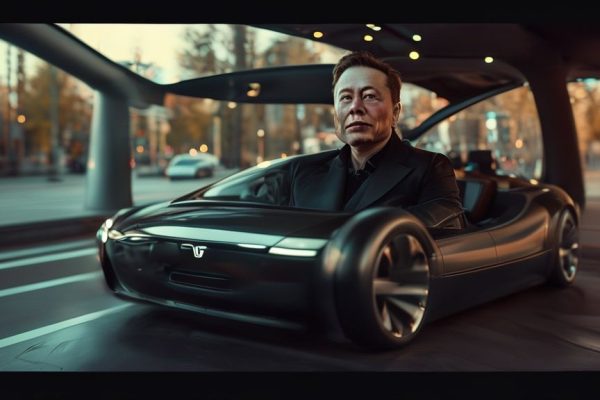
Elon Musk’s Robotaxi Vision: A Reality Check
Elon Musk, the visionary CEO of Tesla, has long been a proponent of self-driving cars. His ambitious goal of making Teslas’ newly unsupervised robotaxis a reality has been met with both excitement and skepticism. While Musk celebrated this milestone, the future of robotaxis remains uncertain, with many questions surrounding their accessibility and safety.
Background: The Road to Self-Driving Cars
The journey to self-driving cars has been a long and complex one. Tesla has been at the forefront of this innovation, with its Autopilot feature allowing cars to drive semi-autonomously. However, fully autonomous vehicles (AVs) that can operate without human intervention have proven more challenging to develop. The technology requires advanced sensors, sophisticated software, and rigorous testing to ensure safety and reliability.
Despite these challenges, Tesla has made significant strides in this area. In 2020, the company announced its Full Self-Driving (FSD) capability, which enables Teslas to navigate complex roads and scenarios without human input. However, the FSD system is still in its early stages, and many experts have raised concerns about its limitations and potential risks.
The Robotaxi Conundrum: Accessibility and Safety
So, what exactly does it mean for Teslas to have unsupervised robotaxis? In theory, this would allow passengers to ride in cars that can operate without human intervention, reducing the need for drivers and increasing mobility for those who cannot drive themselves. However, the reality is more complicated.
For one, it’s unclear how many people will be able to ride in Teslas’ robotaxis in the immediate future. The technology is still in its infancy, and regulatory frameworks are still being developed. Additionally, safety concerns remain a major hurdle. AVs are only as good as the data they receive, and any defects or biases in this data can have serious consequences.
Moreover, the accessibility of robotaxis is a major issue. Who will be able to afford these services? How will they be integrated into existing transportation systems? And what about the jobs of human drivers? These are just a few of the questions that need to be addressed before robotaxis can become a reality.
The Future of Self-Driving Cars: What’s Next?
So, what’s next for self-driving cars? While Tesla’s robotaxis milestone is a significant step forward, it’s just one part of a much larger story. As the world moves towards greater autonomy, we can expect to see significant changes in the way we travel, work, and live.
Regulatory frameworks will need to be developed to oversee the deployment of AVs. This will involve a delicate balance between innovation and safety, as well as addressing concerns around accessibility and job displacement.
Furthermore, the development of AVs will require significant investment in infrastructure, including the installation of dedicated lanes and the development of new traffic management systems. This will be a costly and complex process, but one that will ultimately pay off in the form of increased safety and mobility.
Key Points:
- Elon Musk’s vision for unsupervised robotaxis is a significant step forward in the development of self-driving cars.
- However, many questions surround the accessibility and safety of these vehicles.
- Regulatory frameworks will need to be developed to oversee the deployment of AVs.
- The development of AVs will require significant investment in infrastructure.
- The future of self-driving cars holds significant potential for increased safety and mobility.
Conclusion
The story of self-driving cars is one of innovation and progress. While challenges remain, the potential benefits are significant. As we move forward, it’s essential to address the questions surrounding accessibility, safety, and regulatory frameworks. With careful planning and investment, we can unlock the full potential of AVs and create a safer, more mobile future for all.
Image Prompt:
A futuristic illustration of a Tesla robotaxi driving down a city street, with a diverse group of passengers inside. The background features a cityscape with towering skyscrapers and bustling streets. The robotaxi is depicted in a sleek and modern design, with a glowing blue line indicating its autonomous navigation system. The image should convey a sense of innovation, progress, and possibility.






Leave a Reply