Changes in Hair-Pulling Judgement: A Response to Increasing Controversies
The Premier League has announced a significant change in the way referees will judge hair-pulling incidents next season. This decision comes on the back of three players being sent off for the offence in the 2025-26 season. The move is seen as a response to the increasing number of controversies surrounding hair-pulling, particularly in high-intensity matches.
Hair-pulling, also known as hair-pulling or grasping, is a common tactic used to distract opponents and gain an advantage. However, when it becomes excessive or intentional, it can lead to serious consequences, including red cards. The Premier League’s decision to revise its guidelines on hair-pulling suggests that the governing body is taking a firmer stance on this issue.
Background and Context: Hair-Pulling in the Premier League
Hair-pulling has been a contentious issue in the Premier League for several seasons. While it is not uncommon for players to engage in some level of physical contact during matches, hair-pulling is considered a more serious offence. In the past, referees have struggled to differentiate between hair-pulling and other forms of contact, leading to inconsistent decisions.
The issue came to a head in the 2025-26 season, when three players were sent off for hair-pulling. The high-profile incidents sparked a heated debate among fans, players, and coaches, with many calling for a more consistent approach to refereeing hair-pulling incidents. The Premier League’s decision to revise its guidelines is a response to these concerns.
Key Changes in the Revised Guidelines
The revised guidelines will introduce several key changes to the way referees judge hair-pulling incidents. These changes include:
- Increased emphasis on intent: Referees will now place greater emphasis on the player’s intent when judging hair-pulling incidents. If the player’s actions are deemed to be excessive or intentional, they will be more likely to receive a yellow or red card.
- Improved communication: Referees will be required to provide clearer explanations for their decisions on hair-pulling incidents. This will help to reduce confusion and controversy among fans and players.
- Enhanced training: Referees will receive additional training on hair-pulling, including scenarios and decision-making techniques. This will improve their ability to identify and manage hair-pulling incidents.
Future Implications: A More Consistent Approach to Refereeing
The revised guidelines on hair-pulling are expected to have a significant impact on the Premier League. By introducing a more consistent approach to refereeing, the governing body aims to reduce controversy and improve the overall quality of the game.
The changes are also expected to benefit players, who will be able to focus on their game without the fear of being sent off for unintentional hair-pulling. Coaches and managers will appreciate the clarity and consistency provided by the revised guidelines, which will help to reduce the pressure on their players.
The Premier League’s decision to revise its guidelines on hair-pulling marks a significant shift in refereeing guidelines. By introducing a more consistent approach, the governing body is taking a firmer stance on this issue and improving the overall quality of the game.
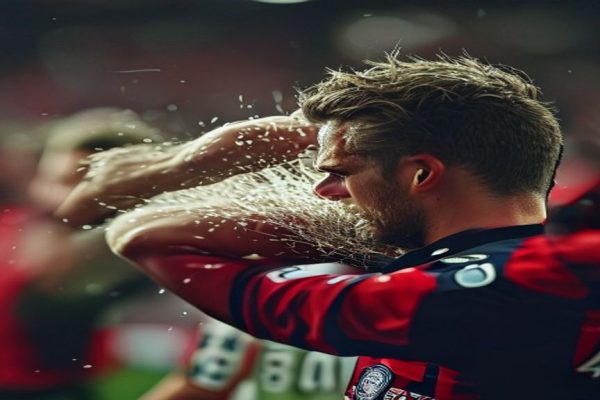
Image Prompt: An AI-generated image of a Premier League referee holding a yellow card, with a player in the background looking concerned about their hair being pulled. The referee’s face should be stern, with a focus on the yellow card. The image should be in a high-contrast color scheme, with the referee’s uniform and the player’s kit standing out against a blurred background.






Leave a Reply