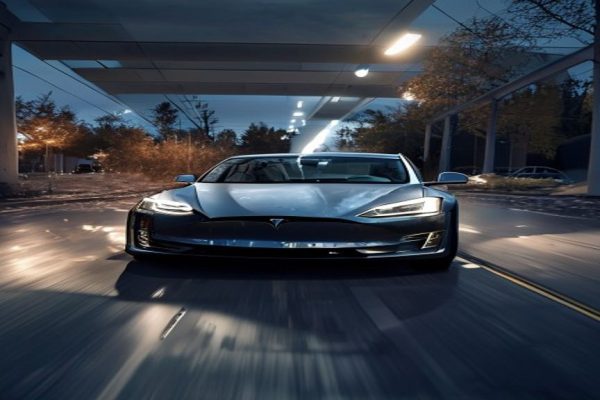
Fatal Crash Raises Concerns Over Tesla’s Autopilot Technology
The recent fatal crash involving a Tesla Model 3 has cast a spotlight on the company’s Autopilot technology, sparking concerns over its safety and reliability. According to reports, the driver of the Model 3 had the accelerator pressed all the way to 100% at the time of the crash, leading to speculation that the vehicle’s Autopilot system may have been a contributing factor.
Background on Tesla’s Autopilot Technology
Tesla’s Autopilot system is a semi-autonomous driving technology that uses a combination of cameras, radar, and ultrasonic sensors to enable the vehicle to steer, accelerate, and brake on its own. The system is designed to assist drivers and improve safety on the road, but it is not a fully autonomous driving system.
However, the recent crash has raised questions about the effectiveness of Autopilot in certain situations. While Tesla’s Autopilot system has been involved in several high-profile crashes in the past, the company has consistently maintained that the system is not at fault and that drivers are responsible for remaining attentive and engaged while using Autopilot.
Implications for the Future of Autonomous Driving
The fatal crash involving the Tesla Model 3 has significant implications for the future of autonomous driving. As more and more vehicles are equipped with semi-autonomous driving systems, the need for robust safety protocols and regulations becomes increasingly important.
The National Highway Traffic Safety Administration (NHTSA) has launched an investigation into the crash, and several lawmakers have called for greater regulation of the autonomous driving industry. Tesla, meanwhile, has promised to cooperate fully with the investigation and to continue improving its Autopilot technology.
While the recent crash is a setback for the autonomous driving industry, it also serves as a reminder of the importance of prioritizing safety and reliability in the development of these technologies. As the industry continues to evolve, it is likely that we will see significant improvements in the safety and effectiveness of semi-autonomous driving systems.
- The fatal crash involving a Tesla Model 3 has raised concerns over the safety and reliability of the company’s Autopilot technology.
- Tesla’s Autopilot system is a semi-autonomous driving technology that uses a combination of cameras, radar, and ultrasonic sensors to enable the vehicle to steer, accelerate, and brake on its own.
- The National Highway Traffic Safety Administration (NHTSA) has launched an investigation into the crash, and several lawmakers have called for greater regulation of the autonomous driving industry.
- Tesla has promised to cooperate fully with the investigation and to continue improving its Autopilot technology.
In the meantime, Tesla owners and users should be aware of the limitations of Autopilot and remain attentive and engaged while using the system. By prioritizing safety and reliability, we can work towards a future where semi-autonomous driving systems are a common and trusted part of the transportation landscape.






Leave a Reply