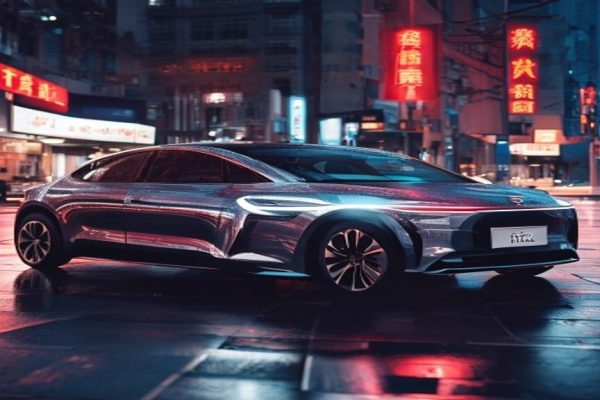
Chinese Electric Vehicle Manufacturer Hits Roadblock
In a significant development, a Chinese electric vehicle (EV) manufacturer has been denied authorization to operate in a key global market due to a new rule that bans vehicles featuring software from China. The move is part of a broader effort by governments worldwide to address concerns over cybersecurity and intellectual property theft.
The new rule, which has been implemented by several countries, prohibits the importation and sale of vehicles equipped with Chinese-made software. This has put the Chinese EV manufacturer in a precarious position, as its vehicles rely heavily on Chinese-developed software for their advanced features and connectivity.
The affected company’s vehicles were set to hit the global market, but the denial of authorization has put their launch on hold. This is a significant setback for the company, as it had high hopes of expanding its customer base and increasing its market share in the global EV market.
Background and Context
The ban on Chinese software is not a new phenomenon, but it has gained momentum in recent years due to growing concerns over cybersecurity and intellectual property theft. Several countries, including the United States, the European Union, and Australia, have implemented or are considering implementing similar rules to restrict the use of Chinese-made software in critical infrastructure and high-tech products.
The Chinese government has been accused of using its software and technology to spy on foreign companies and governments, and to steal intellectual property. While China has denied these allegations, the concerns have led to a growing trend of countries imposing restrictions on Chinese-made software.
Future Implications
The ban on Chinese software has significant implications for the global EV market. Chinese EV manufacturers, such as the affected company, rely heavily on Chinese software for their advanced features and connectivity. If these companies are unable to access global markets, it could lead to a significant decline in their sales and revenue.
The ban could also have broader implications for the global economy. The EV industry is a growing sector, and a significant decline in Chinese EV sales could lead to job losses and economic instability in countries that rely heavily on the industry.
However, the ban could also create opportunities for non-Chinese EV manufacturers to fill the gap. Companies that have been investing in developing their own software and technology could see a boost in sales and revenue as Chinese EV manufacturers are forced to adapt to the new rules.
Key Points to Note
- The new rule bans vehicles featuring software from China.
- The affected company’s vehicles were set to hit the global market, but the denial of authorization has put their launch on hold.
- The ban on Chinese software is part of a broader effort by governments worldwide to address concerns over cybersecurity and intellectual property theft.
- The Chinese government has been accused of using its software and technology to spy on foreign companies and governments, and to steal intellectual property.
- The ban could have significant implications for the global EV market and the broader economy.
As the global EV market continues to evolve, it will be interesting to see how Chinese EV manufacturers adapt to the new rules and how non-Chinese manufacturers capitalize on the opportunities that arise.






Leave a Reply