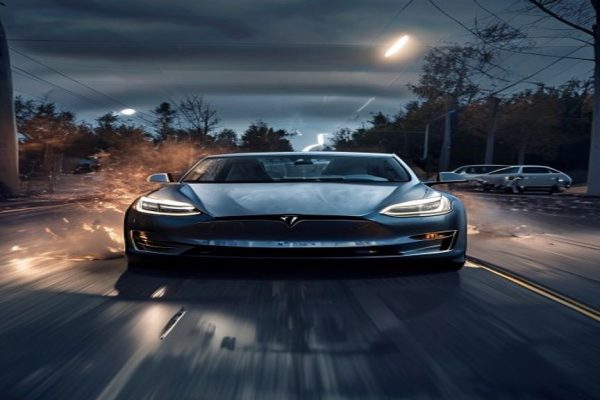
Deadly Crash Raises Concerns Over Tesla’s Autopilot Technology
The recent fatal crash involving a Tesla Model 3 has once again brought the spotlight on the company’s Autopilot technology. The incident, which resulted in the loss of life, has sparked concerns over the safety and reliability of Tesla’s semi-autonomous driving system. According to the National Highway Traffic Safety Administration (NHTSA), the Model 3 driver had the accelerator pressed all the way to 100% at the time of the crash, raising questions about the effectiveness of Autopilot in preventing such accidents.
Tesla’s Autopilot technology is designed to assist drivers in certain driving scenarios, such as highway cruising and lane changes. However, the system is not foolproof, and experts warn that it can be prone to errors, particularly in situations where the driver is not paying attention or is driving in conditions that are not suitable for Autopilot.
Background and Context
Tesla has been at the forefront of the autonomous driving revolution, with its Autopilot technology considered one of the most advanced in the industry. The system uses a combination of cameras, radar, and ultrasonic sensors to detect the environment and make adjustments to the vehicle’s trajectory. However, despite its advanced capabilities, Autopilot is not a fully autonomous driving system, and drivers are still required to maintain control of the vehicle at all times.
The recent crash has highlighted the need for greater transparency and accountability in the development and deployment of autonomous driving technology. Critics argue that Tesla has been too aggressive in its rollout of Autopilot, without sufficient testing and validation to ensure its safety and reliability.
The Future of Autonomous Driving
The incident has also raised concerns over the future of autonomous driving, with some experts warning that the technology may not be ready for widespread adoption. While Autopilot has been instrumental in reducing accidents and improving safety on the roads, the recent crash serves as a reminder that there is still much work to be done to ensure the safety and reliability of autonomous driving systems.
In the wake of the crash, Tesla has announced plans to upgrade its Autopilot software to improve its safety and reliability. The company has also pledged to increase transparency and accountability in its development and deployment of autonomous driving technology. However, the incident has also sparked a broader debate over the role of government regulation in ensuring the safety and reliability of autonomous driving systems.
As the world continues to grapple with the implications of autonomous driving, one thing is clear: the technology is here to stay, but it must be developed and deployed with safety and reliability at the forefront. The recent crash serves as a reminder of the importance of responsible innovation and the need for greater transparency and accountability in the development and deployment of autonomous driving technology.
Key Points:
- Tesla’s Autopilot technology is under scrutiny following a fatal crash involving a Model 3.
- The incident raises concerns over the safety and reliability of Autopilot, particularly in situations where the driver is not paying attention.
- Tesla has announced plans to upgrade its Autopilot software to improve its safety and reliability.
- The incident has sparked a broader debate over the role of government regulation in ensuring the safety and reliability of autonomous driving systems.






Leave a Reply