Elon Musk’s Ambitious Plan for Autonomous Robotaxis
Elon Musk, the CEO of Tesla, has been at the forefront of innovation in the automotive industry with his ambitious plans for electric vehicles and autonomous driving technology. The latest development in this regard is the announcement of unsupervised robotaxis, which has sent shockwaves of excitement and skepticism across the globe.
Background and Context
The concept of self-driving cars has been around for decades, but it is only in recent years that companies like Tesla, Waymo, and Cruise have made significant progress in developing the necessary technology. Tesla’s Autopilot and Full Self-Driving (FSD) capabilities have been at the forefront of this revolution, with some of its vehicles already equipped with level 3 autonomous driving capabilities.
However, the announcement of unsupervised robotaxis marks a significant milestone in the development of autonomous driving technology. It implies that Tesla’s FSD system is now capable of operating without human intervention, a capability that could potentially disrupt the entire transportation industry.
Key Benefits and Implications
- Increased Safety: Autonomous vehicles have the potential to reduce accidents caused by human error, which accounts for over 90% of all road accidents.
- Improved Efficiency: Self-driving cars can optimize traffic flow, reduce congestion, and decrease travel times.
- Enhanced Mobility: Autonomous vehicles can provide transportation to people who are unable to drive themselves, such as the elderly, disabled, and visually impaired.
- Job Displacement: The widespread adoption of autonomous vehicles could lead to job displacement in the transportation sector, particularly among truck drivers and taxi drivers.
- Regulatory Challenges: Governments and regulatory bodies will need to adapt to the changing landscape of autonomous vehicles, which could lead to regulatory challenges and conflicts.
Challenges and Limitations
While the announcement of unsupervised robotaxis is a significant milestone, there are still several challenges and limitations that need to be addressed. These include:
- Edge Cases: Autonomous vehicles still struggle to handle complex edge cases, such as construction zones, pedestrians, and unexpected road conditions.
- Limited Sensor Suite: While Tesla’s FSD system is equipped with a suite of sensors, it still lacks the comprehensive sensor suite required for truly autonomous driving.
- Software Updates: Autonomous vehicles require frequent software updates, which can be a challenge in terms of ensuring the vehicle’s safety and performance.
Future Implications and Impact
The widespread adoption of unsupervised robotaxis has the potential to revolutionize the transportation industry, but it also raises several concerns and challenges. As we move forward, it will be essential to address these challenges and limitations, as well as to develop regulatory frameworks that support the growth of autonomous vehicles.
The impact of unsupervised robotaxis will be felt across various industries, including transportation, logistics, and urban planning. It will also have significant implications for the environment, as autonomous vehicles can optimize traffic flow and reduce congestion, which can lead to reduced emissions and improved air quality.
In conclusion, Elon Musk’s announcement of unsupervised robotaxis marks a significant milestone in the development of autonomous driving technology. While there are still several challenges and limitations that need to be addressed, the potential benefits of this technology are undeniable. As we move forward, it will be essential to work together to develop regulatory frameworks, address technical challenges, and ensure that the benefits of unsupervised robotaxis are shared equitably across society.
Image Prompt:
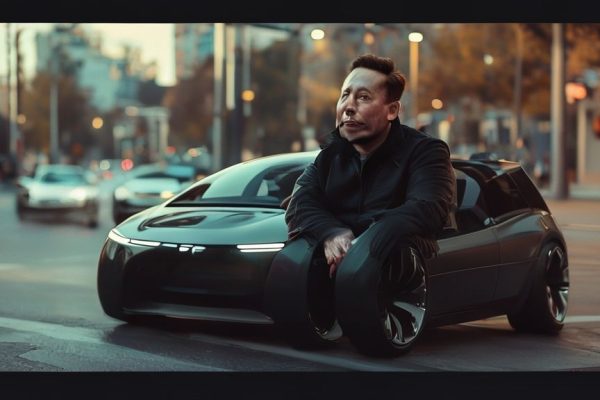
A futuristic image of a Tesla robotaxi driving down a city street, with a blurred background to represent the seamless integration of autonomous vehicles into urban environments. The robotaxi should be equipped with a sleek and futuristic design, with a prominent display screen showing the vehicle’s navigation and safety features. The image should convey a sense of confidence, safety, and innovation, highlighting the potential of unsupervised robotaxis to revolutionize the transportation industry.






Leave a Reply