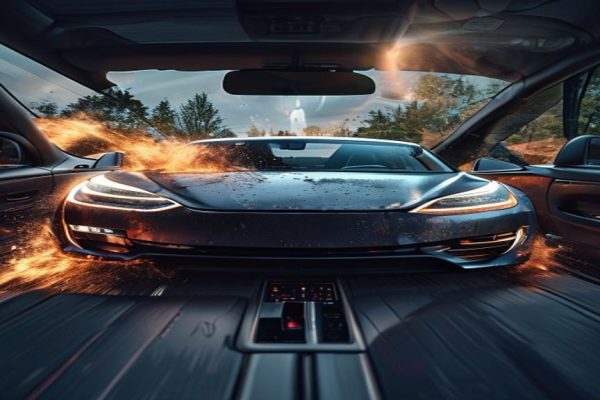
Fatal Crash Highlights the Dark Side of Autopilot Technology
The recent fatal crash involving a Tesla Model 3 driver has raised serious concerns about the safety and reliability of Autopilot technology. According to Tesla, the driver had the accelerator pressed all the way to 100% at the time of the accident, which has sparked a debate about the limitations and potential flaws of semi-autonomous driving systems.
Background and Context
Tesla’s Autopilot system is a semi-autonomous driving technology that uses a combination of cameras, sensors, and mapping data to enable vehicles to drive themselves with minimal human intervention. Autopilot is designed to assist drivers in various driving scenarios, including highway driving, lane changing, and parking.
However, the fatal crash involving the Tesla Model 3 driver has highlighted the potential risks and limitations of Autopilot technology. While Autopilot has been praised for its ability to prevent accidents and reduce driver fatigue, it has also been criticized for its lack of transparency and the potential for driver error.
The National Highway Traffic Safety Administration (NHTSA) has launched an investigation into the crash, and Tesla has released a statement acknowledging the incident and promising to cooperate with the investigation.
Reasons Behind the Crash
The exact reasons behind the fatal crash are still unclear, but several factors may have contributed to the accident. These include:
- The driver’s failure to properly use Autopilot technology, including not keeping their hands on the wheel or not paying attention to the road.
- The limitations and potential flaws of Autopilot technology, including its reliance on cameras and sensors that may not always detect obstacles or pedestrians.
- The lack of transparency and clear guidelines for using Autopilot technology, which may have contributed to driver confusion and misuse.
The crash has also raised questions about the responsibility of the driver versus the manufacturer. While Tesla has emphasized that Autopilot is a driver-assistance system that requires human input, some critics have argued that the company may have been too aggressive in promoting the technology as a means of reducing driver fatigue and improving safety.
Future Implications and Regulatory Changes
The fatal crash involving the Tesla Model 3 driver has significant implications for the future of semi-autonomous driving technology. As the demand for autonomous vehicles continues to grow, regulators and manufacturers must work together to ensure that these technologies are safe, reliable, and transparent.
Regulatory changes may be on the horizon, including stricter guidelines for the use of Autopilot technology and increased transparency about the limitations and potential flaws of semi-autonomous driving systems.
Manufacturers, on the other hand, may need to re-evaluate their approach to promoting and implementing Autopilot technology. This may include providing clearer guidelines and training for drivers, as well as investing in more advanced sensors and mapping data to improve the accuracy and reliability of semi-autonomous driving systems.
Ultimately, the fatal crash involving the Tesla Model 3 driver serves as a reminder of the complexities and challenges of semi-autonomous driving technology. As the industry continues to evolve and improve, it is essential to prioritize safety, transparency, and accountability to ensure that these technologies benefit drivers and passengers alike.
The future of autonomous vehicles is uncertain, but one thing is clear: the industry must work together to address the challenges and limitations of semi-autonomous driving technology and ensure that these vehicles are safe for everyone on the road.






Leave a Reply