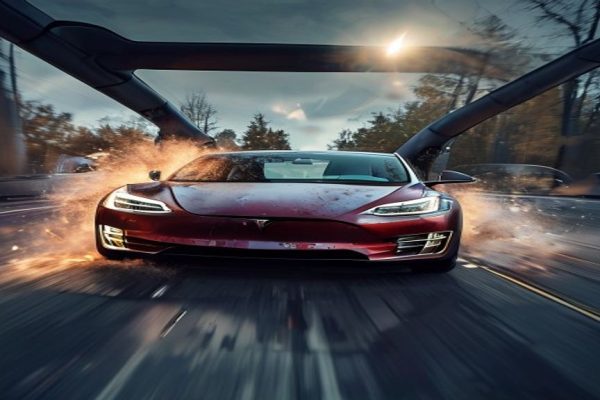
Tragic Incident Highlights Risks of Relying on Autonomous Technology
The recent fatal crash involving a Tesla Model 3 has sparked widespread concern over the safety of the company’s Autopilot system. According to Tesla, the driver had the accelerator pressed all the way to 100% at the time of the crash, which occurred on a rural road in the United States. While the exact circumstances of the incident are still unknown, the incident raises important questions about the reliability and safety of autonomous technology.
Background on Autopilot and its Limitations
Autopilot is a semi-autonomous driving system developed by Tesla, which enables vehicles to steer, accelerate, and brake automatically under certain conditions. The system uses a combination of cameras, radar, and ultrasonic sensors to monitor the road and make decisions in real-time. However, Autopilot is not a fully autonomous system, and drivers are still responsible for monitoring the road and taking control of the vehicle when necessary.
Despite its advanced capabilities, Autopilot has been linked to several high-profile incidents, including a fatal crash in 2016 that killed a driver in Florida. In that incident, the driver was using Autopilot when the vehicle failed to distinguish between a tractor-trailer and a white side mirror, resulting in a collision.
Risks and Limitations of Relying on Autonomous Technology
The Tesla Model 3 crash highlights the risks and limitations of relying on autonomous technology. While Autopilot has been shown to be effective in certain situations, it is not foolproof, and drivers must remain vigilant and attentive at all times. The incident also raises questions about the liability and accountability of manufacturers and regulators in the event of a crash.
In addition, the incident highlights the need for further research and development in the field of autonomous technology. As more vehicles are equipped with semi-autonomous systems, there is a growing need for standardization and regulation to ensure that these systems are safe and reliable.
Key points to consider:
- The Tesla Model 3 crash highlights the risks and limitations of relying on autonomous technology.
- Autopilot is a semi-autonomous driving system that uses cameras, radar, and ultrasonic sensors to monitor the road.
- Drivers must remain vigilant and attentive at all times when using Autopilot.
- There is a growing need for standardization and regulation in the field of autonomous technology.
Future Implications and Recommendations
The Tesla Model 3 crash has significant implications for the development and regulation of autonomous technology. As more vehicles are equipped with semi-autonomous systems, there is a growing need for standardization and regulation to ensure that these systems are safe and reliable.
Manufacturers, regulators, and consumers must work together to develop and implement effective safety standards and protocols for autonomous vehicles. This includes developing and testing more robust and reliable autonomous systems, as well as educating consumers about the risks and limitations of these technologies.
To create a safer and more reliable autonomous driving experience, we recommend the following:
- Manufacturers should prioritize the development and testing of more robust and reliable autonomous systems.
- Regulators should establish and enforce effective safety standards and protocols for autonomous vehicles.
- Consumers should be educated about the risks and limitations of autonomous technology and take steps to stay vigilant and attentive while using these systems.
The future of autonomous technology holds great promise, but it also requires a commitment to safety and reliability. By working together, we can develop and implement effective safety standards and protocols that ensure a safer and more reliable autonomous driving experience for all.






Leave a Reply