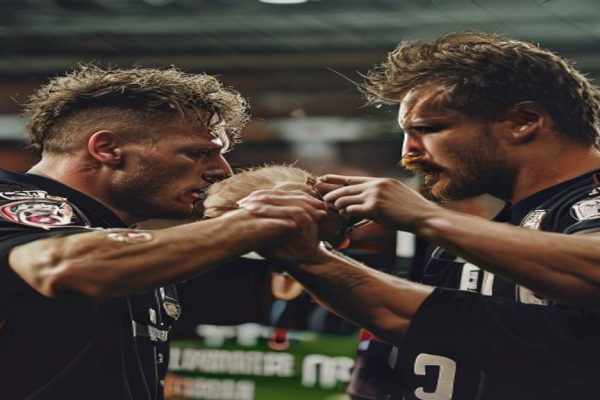
Premier League Referees to Implement New Rules for Hair-Pulling Incidents
The 2025-26 season of the Premier League saw a concerning rise in hair-pulling incidents, with three players receiving red cards for this offense. In response to this growing trend, the English Football Association (FA) has announced plans to introduce new guidelines for referees to handle such situations more effectively next season.
Background and Context: Why Hair-Pulling has become a Growing Concern
Hair-pulling, or more specifically, hair-grabbing, has long been a contentious issue in football. While it is not a new phenomenon, the increasing frequency and severity of incidents have raised concerns among players, coaches, and referees alike. The Premier League’s 2025-26 season saw a significant spike in hair-pulling incidents, with three players receiving red cards for this offense.
Experts attribute the rise in hair-pulling to a combination of factors, including increased physicality on the pitch, the growing importance of set pieces and aerial battles, and a perceived lack of clarity in existing rules.
Current Rules and Challenges Faced by Referees
Under current regulations, hair-pulling is considered a form of holding or grabbing, and is punishable by yellow or red cards, depending on the severity of the offense. However, referees often struggle to distinguish between legitimate attempts to shield or block opponents and more serious cases of hair-pulling.
“Referees are human beings, and they can make mistakes,” said a Premier League referee who wished to remain anonymous. “In the heat of the moment, it can be difficult to determine whether a player has committed a serious offense or simply tried to protect themselves.”
The lack of clarity in existing rules has led to inconsistencies in how hair-pulling incidents are handled, with some referees issuing yellow cards while others opt for the more severe red card.
New Guidelines and Future Implications
The FA’s new guidelines are designed to provide referees with clearer criteria for judging hair-pulling incidents. According to sources, the updated rules will focus on the severity of the offense, taking into account factors such as the level of force used, the duration of the incident, and the impact on the player’s ability to continue playing.
The revised guidelines are expected to include a clearer definition of what constitutes hair-pulling, as well as increased emphasis on referees’ use of video assistant referees (VARs) to aid in their decision-making.
While the new guidelines are expected to reduce the number of hair-pulling incidents, some experts warn that they may not eradicate the problem entirely. “Hair-pulling is a symptom of a larger issue – the physicality and aggression that has become increasingly prevalent in modern football,” said a sports psychologist. “Until we address the root causes of this behavior, we will continue to see incidents like these.”
Ultimately, the FA’s efforts to tackle hair-pulling are a welcome step towards creating a safer and more respectful environment for players. By providing referees with clearer guidelines and increased support, the Premier League can take a crucial step towards reducing the number of hair-pulling incidents and promoting a more positive culture in the sport.
Key Takeaways
- The FA has announced plans to introduce new guidelines for referees to handle hair-pulling incidents more effectively.
- The new guidelines will focus on the severity of the offense, taking into account factors such as the level of force used and the impact on the player’s ability to continue playing.
- Referees will receive increased support and training to aid in their decision-making.
- The revised guidelines are expected to reduce the number of hair-pulling incidents, but may not eradicate the problem entirely.
In conclusion, the Premier League’s efforts to tackle hair-pulling are a step in the right direction towards creating a safer and more respectful environment for players. As the sport continues to evolve, it is essential that we prioritize player safety and well-being, and work towards promoting a more positive culture in football.






Leave a Reply