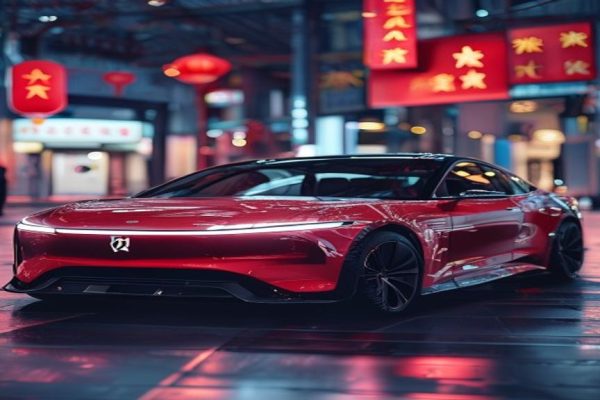
New Trade Restrictions Impose Steep Challenges for Chinese Companies
The recent authorization denial faced by a China-based electric vehicle (EV) manufacturer marks a significant escalation in the escalating trade tensions between the US and China. The company, which has been working tirelessly to establish a foothold in the lucrative US market, has been dealt a severe blow by the introduction of a new rule that effectively bans vehicles with software from China.
The new regulation, which is part of a broader effort to bolster national security and protect intellectual property, has sent shockwaves throughout the EV industry. As the world’s largest EV market, the US has become a crucial battleground for manufacturers seeking to establish a presence in the sector. However, the restrictive new rule has effectively shut the door on Chinese companies, forcing them to navigate a complex and treacherous landscape.
Why the New Rule Matters
The new rule is the latest salvo in a long-standing trade war between the US and China. The ongoing conflict has seen both countries impose increasingly severe tariffs and restrictions on each other’s goods and services. While the US has been seeking to protect its domestic industries and intellectual property, China has retaliated with its own set of measures, including the development of its own EV technology.
The new rule, which targets vehicles with software from China, is a direct response to concerns over national security and intellectual property theft. By banning such vehicles, the US is effectively forcing Chinese companies to invest heavily in local research and development, rather than relying on imported technology.
Impact on the EV Industry
The new rule is expected to have far-reaching implications for the EV industry, with Chinese companies facing significant challenges in establishing a presence in the US market. While some manufacturers may choose to invest in local R&D, others may be forced to abandon their US ambitions altogether.
The impact on the EV industry as a whole is also likely to be significant. With Chinese manufacturers accounting for a substantial portion of global EV sales, the new rule could lead to a shortage of affordable EV options for US consumers. This, in turn, may slow down the transition to cleaner, more sustainable transportation.
However, some experts argue that the new rule could also have a positive impact on the industry. By forcing Chinese companies to invest in local R&D, the US may be able to develop its own EV technology, creating new jobs and driving innovation.
In conclusion, the recent authorization denial faced by the China-based EV manufacturer is a stark reminder of the escalating trade tensions between the US and China. While the new rule may pose significant challenges for Chinese companies, it also presents opportunities for the US to develop its own EV technology and drive innovation in the sector.
Key Points:
- The US has introduced a new rule that bans vehicles with software from China.
- The rule is part of a broader effort to bolster national security and protect intellectual property.
- The new rule is expected to have far-reaching implications for the EV industry, with Chinese companies facing significant challenges in establishing a presence in the US market.
- The rule may slow down the transition to cleaner, more sustainable transportation, but also presents opportunities for the US to develop its own EV technology.






Leave a Reply