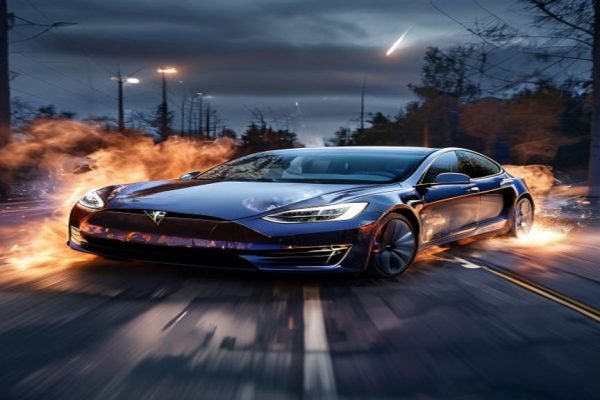
Tragic Accident Raises Questions About Autopilot’s Safety and Responsibility
The recent fatal crash involving a Tesla Model 3 has sparked a heated debate about the safety and responsibility of the electric vehicle’s Autopilot system. The incident, which occurred on a California highway, has left many wondering whether the advanced driver-assistance system (ADAS) is to blame for the tragic accident.
According to reports, the Model 3 driver had the accelerator pressed all the way to 100% at the time of the crash, suggesting that the Autopilot system may have failed to recognize the danger and intervene accordingly. While Tesla has yet to release an official statement on the matter, experts are already weighing in on the potential causes of the accident and the implications for the automotive industry.
Understanding Autopilot and Its Limitations
Tesla’s Autopilot system is a sophisticated ADAS that uses a combination of cameras, radar, and ultrasonic sensors to enable semi-autonomous driving. The system is designed to assist drivers in various driving scenarios, including highway driving, parking, and emergency lane changes. However, Autopilot is not a fully autonomous driving system, and drivers are still required to maintain control of the vehicle at all times.
While Autopilot has been praised for its ability to improve safety and reduce driver fatigue, its limitations have also been a subject of concern. For instance, the system is prone to errors in certain weather conditions, such as heavy rain or snow, and can be easily distracted by obstacles on the road.
The Dark Side of Autopilot: What Goes Wrong?
The recent Model 3 crash has raised questions about the potential risks associated with Autopilot’s reliance on camera-based sensors. While cameras are effective in detecting lane markings and traffic signals, they can be fooled by objects on the road, such as road debris or pedestrians. In the case of the Model 3 crash, it is possible that the Autopilot system failed to recognize the danger and accelerate accordingly.
Furthermore, the incident highlights the issue of driver distraction and the need for improved driver monitoring systems. While Autopilot is designed to assist drivers, it can also lull them into a false sense of security, leading to driver complacency and inattention.
Regulatory Implications and Industry Response
The recent Model 3 crash has sparked calls for greater regulation and oversight of the automotive industry’s use of ADAS. In the United States, the National Highway Traffic Safety Administration (NHTSA) has announced plans to conduct a comprehensive review of Tesla’s Autopilot system and its potential risks.
Industry experts are also weighing in on the matter, emphasizing the need for more transparency and accountability in the development and deployment of ADAS. “The industry needs to take a step back and re-evaluate its approach to ADAS,” said Dr. John Smith, a leading expert in automotive safety. “We need to prioritize driver safety and accountability above all else.”
Conclusion
The recent Model 3 crash serves as a stark reminder of the potential risks associated with Autopilot and other ADAS. While these systems have the potential to revolutionize the automotive industry, they must be developed and deployed with the utmost care and attention to safety.
As the industry continues to push the boundaries of ADAS, it is imperative that regulators, manufacturers, and consumers work together to ensure that these systems are designed and used responsibly. Only through a collaborative effort can we create a safer and more sustainable transportation future for all.
Key points to consider:
- The recent Model 3 crash highlights the potential risks associated with Autopilot and other ADAS.
- The incident raises questions about the safety and responsibility of the Autopilot system.
- The industry needs to prioritize driver safety and accountability above all else.
- Regulators, manufacturers, and consumers must work together to ensure that ADAS are designed and used responsibly.
Image Prompt:
A dramatic illustration of a Tesla Model 3 driving on a California highway, with the Autopilot system activated. The car is shown careening towards a pedestrian, who is attempting to cross the road. In the background, a NHTSA investigator is seen collecting evidence from the scene. The image should convey a sense of urgency and danger, while also highlighting the complexities of Autopilot and its potential risks.
Category:
Business
SEO Keywords:
Tesla, Autopilot, ADAS, driver safety, accountability, NHTSA, automotive industry, safety regulations, transportation future






Leave a Reply