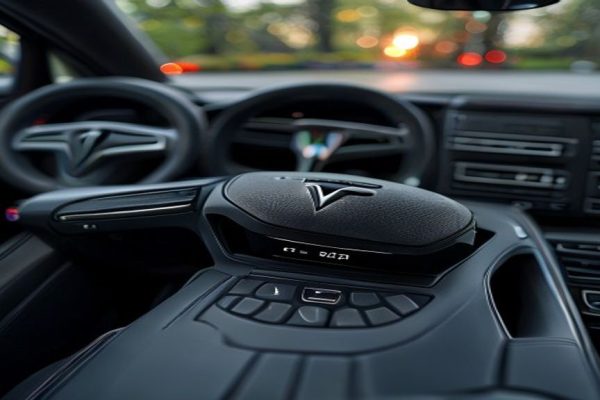
Investigation into Fatal Crash Continues
The National Highway Traffic Safety Administration (NHTSA) is still investigating the cause of a fatal crash involving a Tesla Model 3, with new details emerging in the case. According to a recent report, the driver’s accelerator pedal was found to be fully depressed at 100% when the vehicle crashed, killing two people.
The incident occurred on March 1, 2023, in Texas, and it is one of several high-profile crashes involving Tesla vehicles in recent years. The NHTSA has been investigating the crash, and its findings could have significant implications for the electric vehicle manufacturer and the automotive industry as a whole.
Background on Tesla Autopilot System
Tesla’s Autopilot system is a advanced driver-assistance system (ADAS) that uses a combination of cameras, radar, and ultrasonic sensors to enable semi-autonomous driving. The system is designed to assist drivers and improve safety on the road, but it has been involved in several high-profile crashes in recent years.
One of the key questions in the investigation is whether the Autopilot system was engaged at the time of the crash. Tesla’s Autopilot system can take control of the vehicle in certain situations, but it is not a fully autonomous system and requires driver input at all times.
Key Takeaways from the Investigation
- The driver’s accelerator pedal was fully depressed at 100% when the vehicle crashed.
- The NHTSA is still investigating the cause of the crash and the role of the Autopilot system.
- Tesla has not commented on the investigation, but the company has faced criticism in the past for its handling of Autopilot-related crashes.
- The investigation could have significant implications for the electric vehicle manufacturer and the automotive industry as a whole.
Future Implications of the Investigation
The investigation into the fatal crash could have significant implications for Tesla and the automotive industry as a whole. If the Autopilot system is found to be at fault, it could lead to changes in the way that the system is designed and used. It could also lead to increased scrutiny of Tesla’s safety practices and potentially even changes in regulations governing autonomous vehicles.
On the other hand, if the investigation finds that the driver was at fault and the Autopilot system was not engaged, it could lead to increased confidence in the safety of the system and potentially even increased adoption of autonomous vehicles.
The investigation is ongoing, and it is too early to say what the outcome will be. However, one thing is clear: the safety of autonomous vehicles is a complex issue that requires careful consideration and attention to detail.
The NHTSA has a history of holding manufacturers accountable for safety issues, and it is likely that the agency will take a close look at Tesla’s safety practices in the wake of this investigation. The outcome of the investigation could have significant implications for the electric vehicle manufacturer and the automotive industry as a whole.
As the investigation continues, it is worth noting that the safety of autonomous vehicles is a complex issue that requires careful consideration and attention to detail. The NHTSA has a history of holding manufacturers accountable for safety issues, and it is likely that the agency will take a close look at Tesla’s safety practices in the wake of this investigation.
The outcome of the investigation could have significant implications for the electric vehicle manufacturer and the automotive industry as a whole. As the investigation continues, it is worth noting that the safety of autonomous vehicles is a complex issue that requires careful consideration and attention to detail.






Leave a Reply