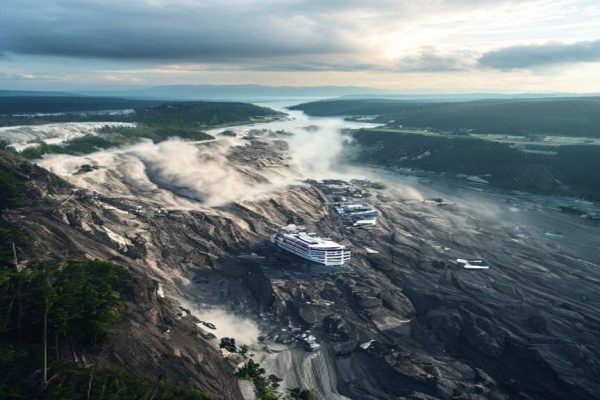
Deadly Landslide Disrupts Alaskan Cruise Season
On the morning of August 10, 2025, a massive landslide struck Alaska’s Tracy Arm fjord, a popular destination for many cruise lines. The disaster has left a trail of devastation in its wake, with the immediate area affected by a towering 1,578-foot-tall mega-tsunami.
The colossal landslide, estimated to be several million cubic meters in size, was triggered by the movement of ice and rock in the fjord’s steep and unforgiving terrain. This type of geological phenomenon is not uncommon in Alaska, where the forces of nature are constantly shaping the landscape.
Tsunami Alert Issued for Alaskan Coast
An emergency alert was issued for the Alaskan coast, warning residents and tourists alike to evacuate the area immediately. The U.S. National Weather Service (NWS) issued a tsunami warning for the eastern coast of Alaska, with waves expected to reach as high as 50 feet (15.2 meters) in some areas.
The National Oceanic and Atmospheric Administration (NOAA) estimated that the tsunami would affect a wide swath of coastline, stretching from Haines to Juneau. Emergency responders and local authorities scrambled to evacuate affected areas, with cruise ships and ferries pressed into service to transport people to safety.
Impact on Cruise Lines and Tourism
The disaster has dealt a devastating blow to Alaska’s cruise industry, which generates billions of dollars in revenue each year. Many cruise lines have been forced to alter their itineraries or cancel their Alaska sailings in the wake of the landslide.
For tourists, the impact will be felt for weeks to come. Those planning to visit Alaska in the coming months may find their travel plans disrupted, with many attractions and activities likely to remain closed.
The long-term implications of the landslide and subsequent tsunami are still unclear, but it’s likely that Alaska’s tourism industry will take a significant hit. The local economy relies heavily on the influx of visitors each year, and a decline in tourist numbers could have far-reaching consequences.
Scientific Community Weighs In
Scientists at the University of Alaska Fairbanks are studying the landslide and tsunami, seeking to understand the underlying causes of the disaster. The university’s geology department has released a statement indicating that the landslide was likely triggered by a complex interplay of geological factors, including the movement of ice and rock in the fjord.
Researchers are also using advanced computer models to simulate the effects of the tsunami, helping to predict the potential impact on the Alaskan coast. This information will be crucial in informing emergency responders and local authorities as they work to mitigate the effects of the disaster.
Frequently Asked Questions
- Q: What caused the landslide?
- A: The landslide was likely triggered by a complex interplay of geological factors, including the movement of ice and rock in the fjord.
- Q: What is the impact on cruise lines?
- A: Many cruise lines have been forced to alter their itineraries or cancel their Alaska sailings in the wake of the landslide.
- Q: What are the long-term implications for tourism in Alaska?
- A: The disaster could have far-reaching consequences for Alaska’s tourism industry, with a decline in tourist numbers potentially affecting the local economy.






Leave a Reply