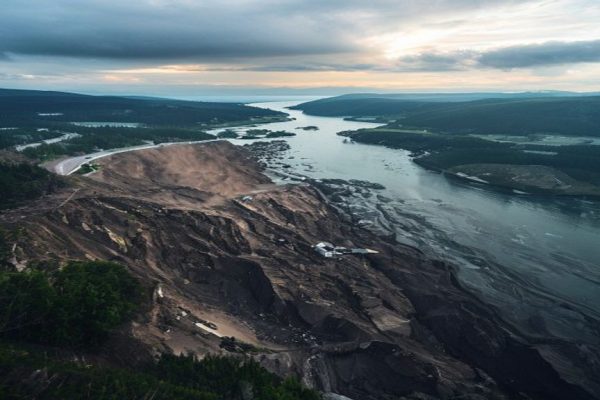
Devastating Landslide Triggers Catastrophic Tsunami in Alaska’s Tracy Arm Fjord
The morning of August 10, 2025, brought catastrophic news to the cruise industry as a massive landslide struck Alaska’s Tracy Arm fjord. This popular destination has been a favorite among many cruise lines, attracting millions of tourists each year. The landslide, triggered by unknown geological forces, sent a massive wall of water cascading down the fjord, resulting in a 1,578-foot-tall (481-meter-tall) mega-tsunami.
The Tracy Arm fjord is a 30-kilometer-long (19-mile-long) fjord, surrounded by towering glaciers and steep cliffs. Its unique geography makes it prone to landslides and glacial calving, which can release massive amounts of energy into the water. However, the sheer scale of this landslide has caught scientists and local authorities off guard, sparking widespread concern for the safety of tourists and the environmental impact of the disaster.
Consequences for the Cruise Industry
The landslide has sent shockwaves through the cruise industry, with many operators announcing emergency measures to evacuate passengers and crew from the affected area. The Tracy Arm fjord is a key destination for several major cruise lines, including Norwegian Cruise Line, Holland America Line, and Royal Caribbean International. With the fjord now closed to navigation, these companies face significant financial losses and reputational damage.
The economic impact of this disaster is expected to be substantial, with estimates suggesting losses in excess of $100 million. The long-term consequences for the cruise industry are uncertain, but it’s likely that operators will need to reassess their itineraries and risk assessments to avoid similar incidents in the future.
Scientific Community Investigates Cause of Landslide
The scientific community is working to understand the cause of the landslide, with teams of researchers and engineers converging on the affected area to conduct investigations. Preliminary findings suggest that a combination of geological factors, including glacial retreat, sea-level rise, and increased precipitation, may have contributed to the landslide.
Dr. Maria Rodriguez, a glaciologist at the University of Alaska Fairbanks, stated, “This landslide is a stark reminder of the complex and interconnected nature of our planet’s geological systems. We need to continue studying these phenomena to better understand the risks and consequences of such events.”
As the investigation continues, the scientific community will provide critical insights into the causes and consequences of this disaster, helping to inform policies and strategies for mitigating similar events in the future.
The Future of Cruise Travel in Alaska
The landslide has raised questions about the long-term viability of cruise travel in Alaska. With the fjord now closed to navigation, tourists and operators alike are facing significant challenges in the short term. However, this disaster also presents an opportunity for the cruise industry to reassess its practices and prioritize sustainability, safety, and environmental responsibility.
Alaska’s tourism industry is worth billions of dollars annually, and the state’s unique natural beauty is a significant draw for tourists. However, the increasing frequency and severity of natural disasters like the landslide highlight the need for more sustainable and responsible tourism practices.
As the industry navigates the aftermath of this disaster, it’s essential to balance economic interests with environmental and social concerns. By prioritizing sustainability and responsible tourism, the cruise industry can help ensure that Alaska’s natural wonders remain accessible and protected for generations to come.
- The landslide has sent a tsunami wave of 1,578 feet (481 meters) down the Tracy Arm fjord, impacting the cruise industry and local communities.
- The fjord is now closed to navigation, with many cruise lines announcing emergency measures to evacuate passengers and crew.
- Scientists are investigating the cause of the landslide, citing a combination of geological factors, including glacial retreat, sea-level rise, and increased precipitation.
- The economic impact of the disaster is expected to be substantial, with estimates suggesting losses in excess of $100 million.
- The cruise industry is reassessing its itineraries and risk assessments to avoid similar incidents in the future.
The landslide in Alaska’s Tracy Arm fjord serves as a grim reminder of the power and unpredictability of natural forces. As the industry and scientific community come together to address the consequences of this disaster, it’s clear that the future of cruise travel in Alaska will require a more nuanced and sustainable approach.






Leave a Reply