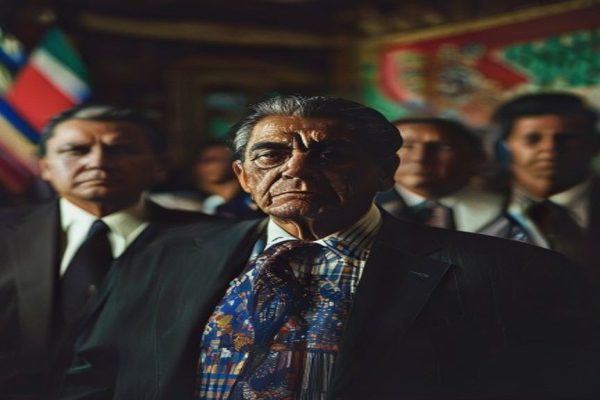
Latin America’s Quiet Crisis: Leaders’ Popularity Takes a Hit
The recent decline in popularity of several Latin American leaders has sparked concerns about the region’s democratic stability. While the story has received relatively little attention in the international media, local outlets are sounding the alarm, with Brazil’s G1 calling it a “crisis” and Mexico’s La Jornada describing it as a continued fall in popularity for the region’s leaders.
Background and Context
Latin America has a long history of tumultuous politics, with many countries experiencing periods of authoritarian rule, military coups, and social unrest. In recent years, however, the region has made significant strides towards democracy, with many countries holding free and fair elections and establishing strong institutions. However, the current crop of leaders is facing a crisis of legitimacy, with their popularity plummeting in recent months.
The reasons behind this decline are complex and multifaceted. One factor is the economic instability that has plagued many Latin American countries in recent years, with high inflation, poverty, and unemployment rates taking a toll on the population’s living standards. Additionally, corruption scandals and human rights abuses have further eroded trust in the government and the political elite.
Key Players and Their Struggles
- Brazil’s President Luiz Inácio Lula da Silva has seen his popularity decline significantly in recent months, with his approval ratings dropping to a record low of 13% in some polls. The president has faced criticism for his handling of the economy, as well as his government’s response to a series of high-profile corruption scandals.
- In Mexico, President Andrés Manuel López Obrador has faced criticism for his controversial policies, including his efforts to centralize power and undermine the independence of the judiciary. His approval ratings have also taken a hit, with some polls showing a significant decline in support for the president.
- In other countries, such as Argentina and Chile, leaders are facing similar challenges, with high inflation rates, unemployment, and social unrest contributing to a decline in popularity.
Future Implications and Concerns
The decline in popularity of Latin America’s leaders has significant implications for the region’s democratic stability. If the current trend continues, it could lead to a rise in authoritarianism, as well as a decline in the region’s economic prospects. The international community should be paying close attention to these developments, as they have significant implications for global stability and security.
In conclusion, the quiet crisis in Latin America is a serious issue that demands attention and action. The region’s leaders must take steps to address the underlying causes of their declining popularity, such as corruption, economic instability, and human rights abuses. If they fail to do so, the consequences could be severe, with potentially far-reaching implications for the region and the world.
Image prompt: A photo of a group of protesters gathered in a city square, holding signs and banners with anti-government slogans. In the background, a large banner reading “¡Basta de corrupción!” (Enough corruption!) can be seen. The photo should be shot in a way that captures the mood and atmosphere of the protest, with a mix of anger, frustration, and determination.






Leave a Reply