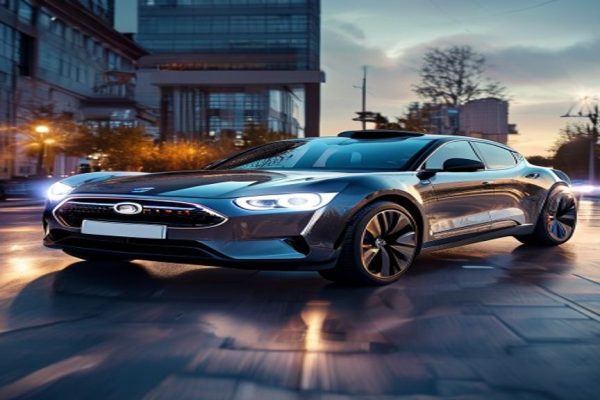
Breaking Down Barriers: Ford’s Quest for Affordable Electric Vehicles
As the world continues its transition towards a more sustainable future, the demand for electric vehicles (EVs) has reached an all-time high. However, the steep price tags associated with these eco-friendly vehicles have been a significant barrier to adoption. In a bid to crack the code on cheap EVs, Ford, one of the world’s leading automakers, has been experimenting with innovative designs, materials, and manufacturing techniques.
Recently, it was reported that Ford is exploring the use of unibodies, zonal architecture, and shorter wiring harnesses in their EVs. But what do these terms mean, and how can they contribute to making EVs more affordable?
Unibodies: The Lightweight Alternative
Traditionally, vehicles have been constructed using a body-on-frame design, which involves attaching a separate body to a frame. However, this approach can be heavy, cumbersome, and expensive. Unibodies, on the other hand, feature a single, unified structure that combines the body and frame into a single unit. This design not only reduces weight but also enhances safety and fuel efficiency.
By adopting unibodies in their EVs, Ford aims to minimize production costs while maintaining the structural integrity and durability of their vehicles. This innovative approach has already been successful in the automotive industry, with many manufacturers incorporating unibodies into their designs.
Zonal Architecture: The Future of Vehicle Design
Zonal architecture is another innovative concept that Ford is exploring in their EVs. This approach involves dividing the vehicle’s electrical architecture into distinct zones, each with its own dedicated power source and control system. This design enables greater flexibility, efficiency, and reliability in the vehicle’s electrical system.
By implementing zonal architecture, Ford can simplify the production process, reduce complexity, and minimize the risk of electrical faults. This, in turn, can lead to significant cost savings and improved overall performance.
Shorter Wiring Harnesses: A Cost-Effective Solution
Wiring harnesses are a critical component of any vehicle, responsible for transmitting electrical signals and power throughout the system. However, traditional wiring harnesses can be cumbersome, expensive, and prone to damage. Ford’s innovative solution involves using shorter wiring harnesses, which reduce the need for extensive cabling and minimize the risk of electrical interference.
By adopting shorter wiring harnesses, Ford can reduce production costs, enhance vehicle reliability, and improve overall performance. This cost-effective solution is a significant step towards making EVs more affordable for the masses.
The Future of Electric Vehicles: Ford’s Vision for a Sustainable Future
As the world continues to transition towards a more sustainable future, Ford is committed to playing a leading role in the development of affordable electric vehicles. By leveraging innovative designs, materials, and manufacturing techniques, Ford aims to make EVs more accessible, efficient, and environmentally friendly.
The company’s vision for a sustainable future involves creating a range of EVs that cater to diverse needs and preferences. From compact city cars to family-friendly SUVs, Ford’s electric lineup will offer something for everyone, with a focus on affordability, performance, and eco-friendliness.
Conclusion: Ford’s Commitment to Affordable Electric Vehicles
As the world struggles to balance economic and environmental needs, Ford’s innovative approach to EVs offers a beacon of hope. By exploring cutting-edge designs, materials, and manufacturing techniques, the automaker is poised to revolutionize the EV market and make these eco-friendly vehicles more accessible to the masses.
With a focus on affordability, performance, and sustainability, Ford is leading the charge towards a greener, more equitable future. As we move forward, one thing is clear: the future of electric vehicles is bright, and Ford is at the forefront of this revolution.






Leave a Reply