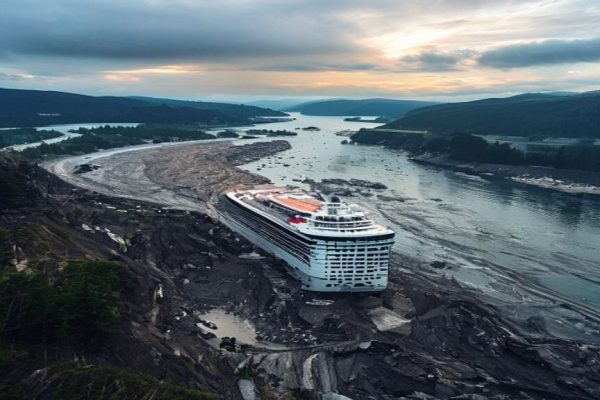
Catastrophic Landslide Strikes Alaska’s Tracy Arm Fjord
The morning of August 10, 2025, will be remembered as a day of devastation and chaos in Alaska’s Tracy Arm fjord, a breathtaking and awe-inspiring destination for many cruise lines. A massive landslide, described as one of the largest in recent history, struck the fjord, sending shockwaves throughout the global travel industry. The landslide’s impact was not only felt in Alaska but also worldwide, as numerous cruise ships were forced to divert their routes or cancel their scheduled visits to the fjord.
The landslide itself was a staggering 1,578 feet tall, leaving a trail of destruction and debris in its wake. Eyewitnesses described the scene as ‘apocalyptic,’ with massive chunks of ice and rock tumbling down the mountain sides and crashing into the fjord below. The sheer scale of the disaster has left experts stunned, with many hailing it as one of the most significant environmental disasters in the region’s history.
Background and Causes
Alaska’s Tracy Arm fjord is renowned for its breathtaking beauty and unique geology. Towering glaciers and majestic mountains create a breathtaking backdrop for the fjord, making it a magnet for cruise ships and adventure-seekers. However, the fjord’s fragile ecosystem and harsh climate have long been a concern for environmentalists and scientists. The area is prone to landslides and rockfalls, particularly during the summer months when the snow and ice melt.
So, what triggered this massive landslide? While the exact cause is still being investigated, experts point to a combination of factors, including climate change, glacial melting, and geological instability. Rising temperatures have accelerated the melting of glaciers in the region, leading to increased water levels and erosion. This, in turn, has put pressure on the surrounding mountains, making them more susceptible to landslides.
Impact on Cruise Ship Industry
The landslide has sent shockwaves throughout the global cruise ship industry, with numerous lines forced to alter their itineraries or cancel their scheduled visits to the fjord. The financial implications for the industry are significant, with estimates suggesting that the loss of business could run into millions of dollars. Cruise lines have been quick to respond, with many offering refunds or rebooking options to affected passengers.
However, the impact goes beyond just financial losses. The landslide has also raised concerns about the long-term sustainability of the cruise ship industry in the region. As the climate continues to change, the risk of similar disasters will only increase, forcing the industry to rethink its operations and adapt to the new reality.
- The landslide has brought attention to the fragile ecosystem of Alaska’s Tracy Arm fjord and the need for sustainable tourism practices.
- The incident highlights the importance of climate change mitigation efforts and the need for the global community to work together to address this pressing issue.
- The cruise ship industry must adapt to the changing climate and develop new strategies to minimize the risks associated with environmental disasters.
Future Implications
The landslide has far-reaching implications for the region, the cruise ship industry, and the global community. As the climate continues to change, we can expect more frequent and severe environmental disasters. It is imperative that we take proactive steps to mitigate these risks and develop sustainable practices that benefit both people and the planet.
Alaska’s Tracy Arm fjord, once a breathtaking destination for adventure-seekers, has been forever changed by the massive landslide. As we move forward, it is essential that we prioritize sustainability, adapt to the changing climate, and work together to protect our planet’s fragile ecosystems.
The landslide serves as a stark reminder of the power of nature and the importance of responsible tourism practices. As we reflect on this disaster, we must also look to the future and work towards creating a more sustainable and resilient world for all.






Leave a Reply