Tesla’s FSD Rollout Delayed for HW3 Cars: A Blow to Autonomous Driving Enthusiasts
Electric vehicle (EV) manufacturer Tesla has recently announced that its Full Self-Driving (FSD) technology will not be available for unsupervised use on cars equipped with Hardware 3 (HW3) computer systems. This news has sparked a mix of disappointment and concern among Tesla’s FSD enthusiasts, who have been eagerly awaiting the rollout of this highly anticipated feature.
Understanding the Background: Tesla’s FSD Roadmap
Tesla’s FSD technology has been in development for several years, with the company aiming to revolutionize the way we think about autonomous driving. The technology uses a combination of sensors, cameras, and machine learning algorithms to enable vehicles to navigate complex road scenarios with minimal human intervention. However, the rollout of FSD has been plagued by delays, with some experts attributing this to the complexity of the technology and the need for extensive testing and validation.
The Role of HW3: A Critical Component in FSD
The HW3 computer system is a key component in Tesla’s FSD architecture, responsible for processing the vast amounts of data generated by the vehicle’s sensors and cameras. However, it appears that the HW3 system is not yet capable of supporting the level of processing required for unsupervised FSD operations. This has led Tesla to reassess its FSD roadmap, with the company now focusing on upgrading the HW3 system to HW4, which is expected to provide the necessary processing power for FSD.
Implications for Tesla and the Autonomous Driving Industry
- Tesla’s decision to delay FSD for HW3 cars raises questions about the company’s ability to meet its ambitious autonomous driving timelines.
- The delay may also impact investor confidence in Tesla’s FSD technology, potentially affecting the company’s stock price and market value.
- However, the delay could also be seen as a necessary step in ensuring the safety and reliability of FSD, which is critical for widespread adoption.
- The autonomous driving industry as a whole may also be impacted, with other companies relying on Tesla’s FSD technology for benchmarking and comparison.
What’s Next for Tesla’s FSD?
Tesla has not provided an official timeline for the upgrade to HW4, but it’s expected that the company will continue to refine its FSD technology in the coming months. In the meantime, Tesla owners with HW3-equipped vehicles will need to continue relying on the company’s assisted driving features, which provide a more limited level of autonomy.
Conclusion
Tesla’s decision to delay FSD for HW3 cars is a significant setback for the company’s autonomous driving ambitions. However, it also highlights the complexity and challenges involved in developing FSD technology, which is critical for widespread adoption. As the autonomous driving industry continues to evolve, it will be interesting to see how Tesla and other companies navigate the technical and regulatory hurdles facing this emerging technology.
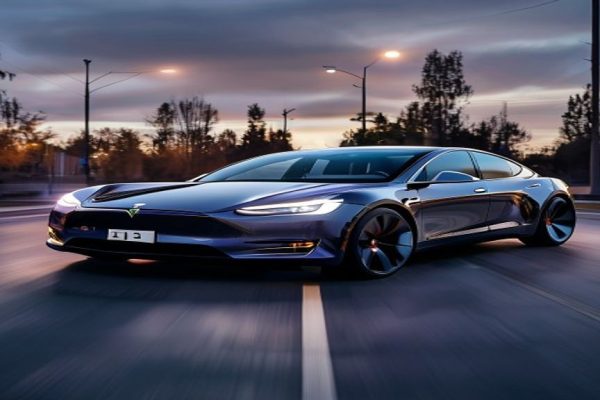
Image Prompt: A Tesla Model S driving autonomously on a highway, with a cityscape in the background. The vehicle is depicted with a subtle HUD display showing the navigation and control systems. The image should convey a sense of futuristic innovation and cutting-edge technology.






Leave a Reply