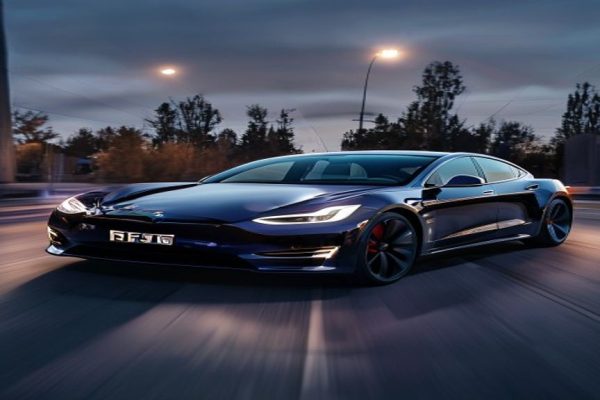
Tesla’s FSD Update: A Breakdown
In a recent statement, Tesla revealed that cars equipped with Hardware 3 (HW3) will not receive the highly anticipated unsupervised Full Self-Driving (FSD) capability. This news has sparked both excitement and disappointment among Tesla enthusiasts, with many questioning what this means for the future of autonomous driving.
For those unfamiliar, Tesla’s Full Self-Driving (FSD) system is a cutting-edge technology designed to enable vehicles to drive themselves without human intervention. While it has made significant progress in recent years, the technology still requires human oversight in most situations. The unsupervised FSD capability, on the other hand, would allow Tesla cars to drive independently without any human input.
The reason behind Tesla’s decision not to provide unsupervised FSD on HW3 cars is largely due to the limitations of the hardware. HW3, while an improvement over its predecessors, still lacks the processing power and sensor capabilities required to support fully autonomous driving. As a result, Tesla has decided to focus on perfecting the supervised FSD experience, which will continue to receive regular updates and improvements.
What This Means for Tesla Owners
While the news may be disappointing for some, it’s essential to understand that Tesla’s FSD system is still an incredibly advanced technology that has already saved countless lives. The supervised FSD experience, which will continue to receive updates, will provide Tesla owners with a safe and reliable driving experience.
It’s also worth noting that Tesla has been working on a new hardware platform, known as HW4, which promises to bring significant improvements in processing power and sensor capabilities. This new hardware will likely provide the necessary foundation for unsupervised FSD in the future.
In the meantime, Tesla owners can continue to enjoy the supervised FSD experience, which will continue to receive regular updates and improvements. This includes features like Autopilot, which enables semi-autonomous driving, and the ability to summon the vehicle to a specific location using the Tesla app.
The Future of Autonomous Driving
The news may seem like a setback for Tesla’s FSD ambitions, but it’s essential to remember that the company is still pushing the boundaries of autonomous driving. The supervised FSD experience, while not fully autonomous, is still a significant step forward in the development of this technology.
As the world continues to move towards a future of increased automation, it’s essential to recognize the challenges and limitations that come with it. Tesla’s decision not to provide unsupervised FSD on HW3 cars is a testament to the company’s commitment to safety and its willingness to take a more cautious approach when it comes to autonomous driving.
Looking to the future, it’s likely that we’ll see significant advancements in autonomous driving technology, driven by the efforts of companies like Tesla, Waymo, and Cruise. As these technologies continue to evolve, we can expect to see more widespread adoption of autonomous vehicles, which will have a profound impact on the way we travel and live.






Leave a Reply