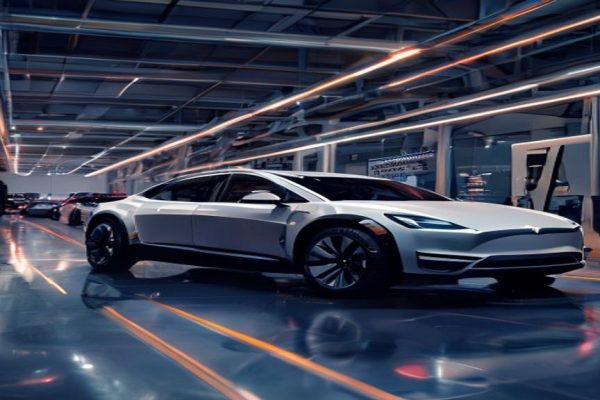
Tesla’s Cybercab Production Set to Begin in April, Raising Questions About Autonomous Taxi Future
Elon Musk’s recent announcement on X has sent shockwaves through the tech and automotive industries, as the Tesla Cybercab is set to start production in April. This development has left some people confused, considering Tesla has been experimenting with a supposedly autonomous taxi service in the past.
Background on Tesla’s Autonomous Taxi Plans
Tesla has been working on its autonomous driving technology, Full Self-Driving Capability (FSD), for several years. The company has been testing its autonomous taxis in various cities, including Los Angeles and New York. However, the project has been met with criticism and regulatory challenges. The California Department of Motor Vehicles (DMV) has been scrutinizing Tesla’s autonomous taxi program, citing safety concerns and the need for more stringent testing protocols.
Despite the setbacks, Tesla has continued to push forward with its autonomous taxi plans. The company has been working on integrating its FSD technology into its vehicles, including the Cybertruck and Model S. However, the Cybercab, a variant of the Cybertruck, has been the focus of speculation and rumors in recent months.
What is the Tesla Cybercab?
The Tesla Cybercab is a modified version of the Cybertruck, designed to serve as a taxi or ride-hailing vehicle. The Cybercab features a unique body design, with a larger interior space and a unique door configuration. The vehicle is expected to be equipped with Tesla’s FSD technology, allowing it to operate autonomously in various scenarios.
So, what does the production of the Cybercab mean for Tesla’s autonomous taxi plans? While the exact implications are still unclear, the announcement has sparked a renewed debate about the future of autonomous transportation. Some experts believe that the Cybercab is a vital step towards realizing Tesla’s vision of a fully autonomous transportation network, while others are more skeptical, citing regulatory and safety concerns.
Regulatory Challenges and Safety Concerns
As Tesla prepares to launch the Cybercab, the company faces significant regulatory challenges. The DMV has yet to approve Tesla’s autonomous taxi program, citing concerns about safety and the need for more stringent testing protocols. Additionally, there are concerns about the lack of clear guidelines and regulations governing autonomous vehicles in the United States.
The production of the Cybercab also raises questions about the safety of autonomous vehicles. While Tesla’s FSD technology has undergone extensive testing, there is still a risk of accidents and malfunctions. The company has faced criticism for its handling of safety issues in the past, including a fatal accident involving a Tesla Model S in 2016.
The Future of Autonomous Transportation
The production of the Cybercab marks a significant milestone in the development of autonomous transportation. While the technology is still in its infancy, the potential benefits are immense. Autonomous vehicles could revolutionize the way we travel, reducing congestion, increasing mobility for the elderly and disabled, and improving road safety.
However, the path forward is fraught with challenges. Regulatory frameworks need to be established, and safety concerns must be addressed. The development of autonomous transportation will require significant investment in infrastructure, technology, and education.
Key Points:
- Tesla’s Cybercab is set to start production in April, raising questions about the future of autonomous taxi service.
- The Cybercab is a modified version of the Cybertruck, designed to serve as a taxi or ride-hailing vehicle.
- Tesla’s autonomous taxi plans have been met with regulatory challenges and safety concerns.
- The production of the Cybercab marks a significant milestone in the development of autonomous transportation.
- The future of autonomous transportation is uncertain, with significant regulatory and safety challenges to overcome.






Leave a Reply