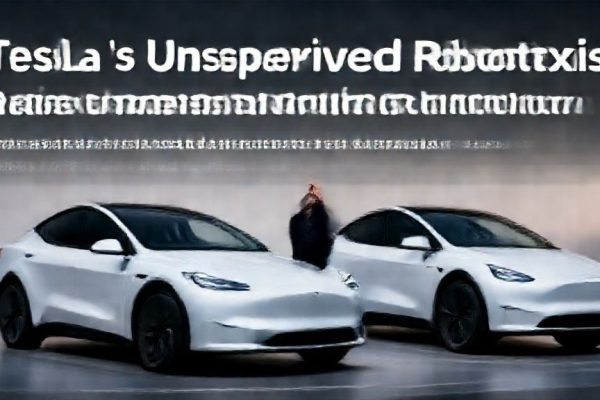
Tesla’s Unsupervised Robotaxis Mark a Significant Step in Autonomous Transportation
In a recent announcement, Elon Musk celebrated a major milestone for Tesla’s autonomous driving technology, stating that their unsupervised robotaxis are now a reality. However, the question remains – how many people will be able to ride in these vehicles in the immediate future?
Background and Context
Tesla’s push to develop full-self driving (FSD) capabilities has been ongoing for several years, with the company making significant progress in recent months. The FSD technology is designed to enable Teslas to navigate complex road scenarios without human intervention, paving the way for autonomous transportation.
- Tesla’s FSD technology uses a combination of sensors, cameras, and machine learning algorithms to detect and respond to various road scenarios.
- The technology has been tested extensively on public roads, with Tesla collecting data from millions of miles of driving.
- The company has faced challenges in developing FSD, including complex regulatory requirements and public skepticism.
Future Implications and Concerns
The introduction of unsupervised robotaxis raises several concerns, including:
- Safety: Many experts worry that the technology may not be foolproof, and accidents could occur due to unforeseen circumstances.
- Regulatory Framework: The regulatory landscape for autonomous vehicles is still unclear, and it’s uncertain how governments will address issues such as liability and insurance.
- Public Acceptance: Consumers may be hesitant to ride in vehicles without human drivers, citing concerns about safety and control.
However, proponents of autonomous transportation argue that it has the potential to revolutionize the way people travel, offering numerous benefits, including:
- Increased mobility for the elderly and disabled.
- Reduced traffic congestion and emissions.
- Improved road safety through reduced human error.
What’s Next for Tesla’s Robotaxis?
Tesla has not provided a clear timeline for when unsupervised robotaxis will become widely available. However, the company has stated that it will continue to refine and improve the FSD technology through ongoing testing and development.
The future of autonomous transportation is complex and multifaceted, with various stakeholders involved. As the technology continues to evolve, it’s essential to address the concerns and challenges associated with it. By doing so, we can unlock the full potential of autonomous transportation and create a safer, more efficient, and more sustainable transportation system.
As the world waits with bated breath for the widespread adoption of unsupervised robotaxis, one thing is clear – Tesla’s milestone marks a significant step forward in the development of autonomous transportation.





Leave a Reply