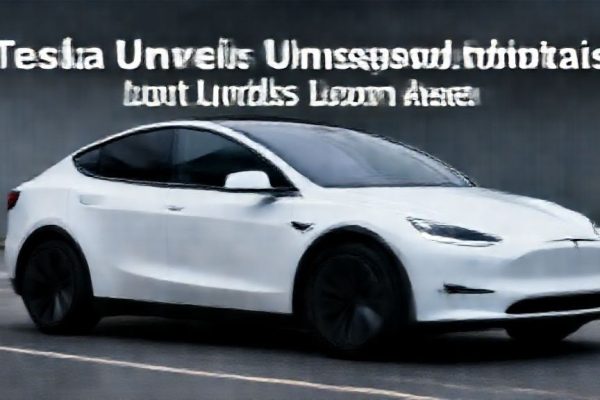
Tesla Unveils Unsupervised Robotaxis, but Hurdles Loom Ahead
In a significant breakthrough in autonomous driving technology, Tesla has successfully tested its unsupervised robotaxis. The news has sent shockwaves across the tech industry, with many hailing it as a major milestone in the development of self-driving cars. However, experts warn that there are still several hurdles to overcome before unsupervised robotaxis can become a reality on public roads.
A Glimpse into the Future of Transportation
Tesla’s unsupervised robotaxis is the culmination of years of research and development in autonomous driving technology. The company’s CEO, Elon Musk, has been a long-time advocate of the potential of self-driving cars to revolutionize the transportation industry. With the ability to transport passengers without human oversight, unsupervised robotaxis has the potential to significantly reduce traffic congestion, improve road safety, and increase mobility for the elderly and disabled.
The test of Tesla’s unsupervised robotaxis was conducted on a closed track, where the vehicle navigated through a series of complex routes and scenarios without any human intervention. The vehicle’s advanced sensors and AI algorithms worked seamlessly together to detect and respond to its surroundings, demonstrating its ability to operate safely and efficiently in a variety of conditions.
Regulatory Challenges Ahead
While the successful testing of Tesla’s unsupervised robotaxis is a significant achievement, there are still several regulatory challenges that must be overcome before the technology can be deployed on public roads. In the US, for example, the National Highway Traffic Safety Administration (NHTSA) and the Federal Motor Carrier Safety Administration (FMCSA) will need to issue new regulations and guidelines for the operation of unsupervised robotaxis.
Additionally, there are concerns about liability in the event of an accident involving an unsupervised robotaxis. Who would be responsible? The manufacturer, the owner, or the passenger? These are questions that will need to be addressed through legislation and regulatory action.
Industry Implications and Future Directions
The successful testing of Tesla’s unsupervised robotaxis has significant implications for the automotive and technology industries. Other companies, such as Waymo and Cruise, are also working on similar technologies and are likely to face similar regulatory challenges.
The widespread adoption of unsupervised robotaxis could also lead to significant changes in the way we think about transportation and mobility. With the potential to reduce traffic congestion and improve road safety, unsupervised robotaxis could become a game-changer for cities and communities around the world.
However, there are also potential risks and challenges associated with the widespread adoption of unsupervised robotaxis. For example, there may be concerns about job displacement, particularly for drivers who rely on their jobs for income.
In conclusion, the successful testing of Tesla’s unsupervised robotaxis is a significant milestone in the development of autonomous driving technology. While there are still regulatory challenges ahead, the potential benefits of this technology are significant and could lead to a revolution in the way we think about transportation and mobility.
As we move forward, it will be essential to address the regulatory and industry implications of unsupervised robotaxis. By doing so, we can ensure that this technology is developed and deployed in a way that benefits all stakeholders and maximizes its potential to improve our lives.
Key Points:
- Tesla has successfully tested its unsupervised robotaxis on a closed track.
- The technology has the potential to revolutionize the transportation industry by reducing traffic congestion and improving road safety.
- Regulatory challenges must be addressed before the technology can be deployed on public roads.
- The successful testing of Tesla’s unsupervised robotaxis has significant implications for the automotive and technology industries.
Image Prompt:
A futuristic illustration of a Tesla robotaxi driving on a busy city street, with a group of people waving and smiling as it passes by. The robotaxi is shown in the foreground, with a bright blue sky and a few buildings in the background. The image should convey a sense of excitement and optimism, with a focus on the potential benefits of autonomous driving technology.
Image Style:
The image should be created in a style that is reminiscent of a concept art piece, with bold lines and vibrant colors. The use of bright blue and white hues will help to convey a sense of optimism and excitement, while the futuristic cityscape will provide a sense of scale and context.





Leave a Reply