Breaking Ground in Autonomous Technology
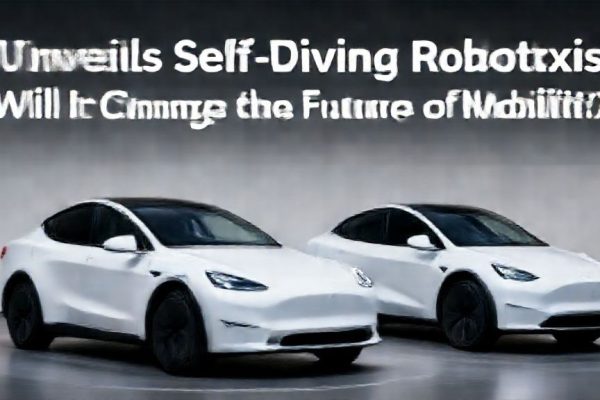
In a landmark announcement, Elon Musk, the CEO of Tesla, has revealed the company’s plans to introduce unsupervised robotaxis to the market. This revolutionary move has sent shockwaves throughout the tech and automotive industries, with many hailing it as a significant breakthrough in autonomous technology.
The development of self-driving robotaxis is a major milestone for Tesla, which has been at the forefront of electric vehicle innovation. The company’s focus on artificial intelligence and machine learning has enabled it to make rapid progress in its autonomous driving capabilities.
The Road to Unsupervised Robotaxis
The journey to unsupervised robotaxis has been a long and arduous one. Tesla has been testing its autonomous driving technology for several years, with the company’s cars equipped with a range of sensors, cameras, and software designed to enable them to navigate complex road networks.
However, ensuring the safety and reliability of these vehicles has been a major challenge. Tesla has faced numerous setbacks, including several high-profile crashes, which have raised questions about the company’s autonomous driving technology.
Challenges Ahead
While the unveiling of unsupervised robotaxis is a significant achievement, there are still several challenges that Tesla needs to overcome. One of the biggest concerns is the issue of liability, with questions surrounding who would be responsible in the event of an accident involving a self-driving robotaxi.
Another challenge is the lack of regulatory frameworks governing the use of autonomous vehicles. Governments around the world are still grappling with how to regulate these vehicles, with some countries introducing strict guidelines while others have taken a more relaxed approach.
Additionally, there are concerns about the job market impact of widespread adoption of autonomous vehicles. While some industries may benefit from the increased mobility and reduced transportation costs, others may struggle to adapt to the changing landscape.
Future Implications
The implications of unsupervised robotaxis are far-reaching and could have a significant impact on various aspects of society. For example, the increased mobility and reduced transportation costs could lead to a shift away from traditional forms of public transportation, potentially reducing congestion and pollution in urban areas.
Additionally, the widespread adoption of autonomous vehicles could revolutionize the way we think about transportation, enabling people to access a range of services and experiences that were previously inaccessible due to mobility constraints.
However, there are also potential downsides to consider. For example, the increased reliance on technology could lead to a loss of human skills and knowledge, particularly for younger generations who may not have the opportunity to learn how to drive.
Conclusion
The unveiling of unsupervised robotaxis by Tesla marks a significant milestone in the development of autonomous technology. While there are still several challenges to overcome, the potential implications of this technology are vast and could have a profound impact on various aspects of society.
As the world continues to grapple with the implications of autonomous vehicles, one thing is clear: the future of mobility is rapidly changing, and Tesla is at the forefront of this revolution.






Leave a Reply