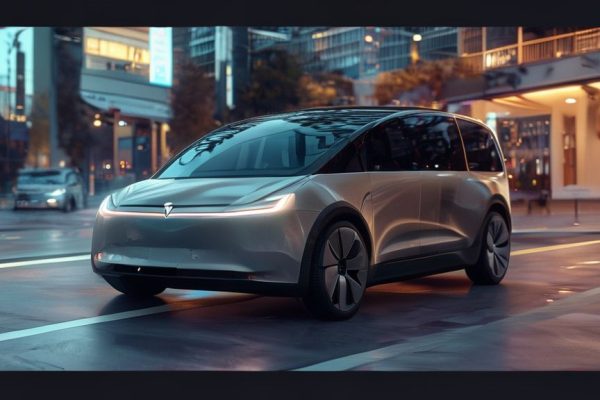
Tesla’s Leap into Autonomous Transportation
Tesla’s recent announcement of its unsupervised robotaxis marks a significant milestone in the development of autonomous transportation. The news sent shockwaves across the industry, with many hailing it as a major breakthrough. However, the road ahead is not without its challenges, and it remains to be seen how many people will be able to ride in these robotaxis in the immediate future.
Background and Context
Autonomous transportation has been a topic of interest for several years, with companies like Waymo, Cruise, and Argo AI making significant strides in the development of self-driving cars. Tesla, under the leadership of Elon Musk, has been a pioneer in this space, with its Autopilot feature already allowing cars to navigate roads with minimal human intervention. However, the recent announcement of unsupervised robotaxis takes this to the next level, with the ability to transport passengers without any human oversight.
The development of unsupervised robotaxis is a result of Tesla’s advancements in machine learning and computer vision. The company’s neural network, known as Full Self-Driving (FSD), has been trained on millions of miles of data, allowing it to recognize and adapt to various road scenarios. This technology has been tested extensively, with Tesla’s robotaxis completing millions of miles of autonomous driving with minimal intervention.
Key Challenges and Future Implications
While the development of unsupervised robotaxis is a significant achievement, there are several challenges that need to be addressed before this technology can become widespread. One of the major concerns is safety, with many experts highlighting the need for robust testing and validation procedures to ensure that these robotaxis can prevent accidents and protect passengers.
Another challenge is regulatory, with many countries still grappling with the issue of how to regulate autonomous vehicles. There is a need for clear guidelines and standards to be put in place to ensure that these robotaxis meet safety and security requirements.
From a commercial perspective, the development of unsupervised robotaxis presents a significant opportunity for Tesla to expand its services and create new revenue streams. With the ability to transport passengers without human intervention, Tesla can potentially disrupt the traditional taxi and ride-hailing industries.
However, the success of unsupervised robotaxis also depends on the adoption of autonomous technology by consumers. Many people are still wary of the idea of being transported by a self-driving car, and there is a need for education and awareness campaigns to build trust and confidence in this technology.
Conclusion
Tesla’s unsupervised robotaxis marks a significant milestone in the development of autonomous transportation. While there are several challenges that need to be addressed, this technology has the potential to revolutionize the way we travel and create new opportunities for businesses. As the industry continues to evolve, one thing is clear – the future of transportation is autonomous, and Tesla is at the forefront of this revolution.
Key Points:
- Tesla’s unsupervised robotaxis marks a significant milestone in the development of autonomous transportation.
- The technology has the potential to disrupt the traditional taxi and ride-hailing industries.
- There are several challenges that need to be addressed before this technology can become widespread, including safety and regulatory concerns.
- Education and awareness campaigns are needed to build trust and confidence in autonomous technology.
- The success of unsupervised robotaxis depends on the adoption of autonomous technology by consumers.
Image Prompt:
A futuristic illustration of a Tesla robotaxi driving on a highway, with a group of people in the back seat looking out the window at the passing scenery. The car is depicted as being sleek and futuristic, with a glowing blue light on the dashboard indicating its autonomous mode. In the background, a cityscape is visible, with towering skyscrapers and busy streets. The image should convey a sense of excitement and innovation, highlighting the potential of autonomous transportation to transform the way we travel.






Leave a Reply