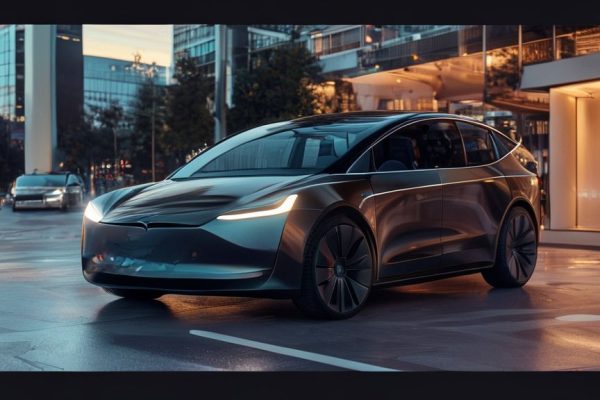
Tesla Takes a Giant Leap Forward in Autonomous Technology
Elon Musk’s vision of a driverless future has taken another significant step forward with the unveiling of Tesla’s unsupervised robotaxis. The announcement sent shockwaves through the tech industry, with many hailing it as a major breakthrough in autonomous technology. However, as the excitement dies down, it’s becoming increasingly clear that there are still many hurdles to overcome before these robotaxis can become a reality for the masses.
Background and Context
Tesla has been working on its Full Self-Driving (FSD) technology for several years, with the goal of enabling its vehicles to operate without human intervention. The company has made significant strides in this area, with its FSD beta program allowing select Tesla owners to test the technology on public roads. However, the latest development marks a major milestone, as it represents the first time a Tesla vehicle has been able to operate unsupervised.
But what does this mean for the average consumer? Unfortunately, it’s still unclear how many people will be able to ride in these robotaxis in the immediate future. Musk has hinted that the technology will be rolled out in phases, with initial launches in controlled environments such as parking lots and designated autonomous zones. However, widespread adoption is still a distant prospect, and many questions remain about the regulatory frameworks that will govern the use of these vehicles.
Key Challenges Ahead
- Regulatory Frameworks:** As mentioned earlier, there are still many regulatory hurdles to overcome before these robotaxis can become a reality. Governments around the world will need to update their laws and regulations to accommodate the use of autonomous vehicles, and this process is likely to take time.
- Safety Concerns:** While Tesla’s FSD technology has shown impressive results in testing, there are still many safety concerns that need to be addressed. How will these vehicles respond in emergency situations, for example, or how will they handle complex scenarios such as construction zones or pedestrian-heavy areas?
- Public Acceptance:** Finally, there’s the issue of public acceptance. Will consumers be willing to give up control of their transportation to a machine, even if it means increased safety and efficiency? These are just a few of the challenges that Tesla and other companies will need to overcome in the coming years.
The Future of Transportation
Despite the challenges ahead, the potential benefits of autonomous transportation are vast. Imagine a world where your daily commute is reduced to a few minutes, where traffic congestion is a thing of the past, and where the risk of accidents is greatly reduced. This is the promise of autonomous technology, and it’s one that Tesla and other companies are working hard to realize.
As we move forward, it will be essential to monitor the progress of Tesla and other companies in the field of autonomous technology. Will they be able to overcome the challenges ahead and bring this technology to the masses? Only time will tell, but one thing is certain – the future of transportation is looking brighter than ever.





Leave a Reply