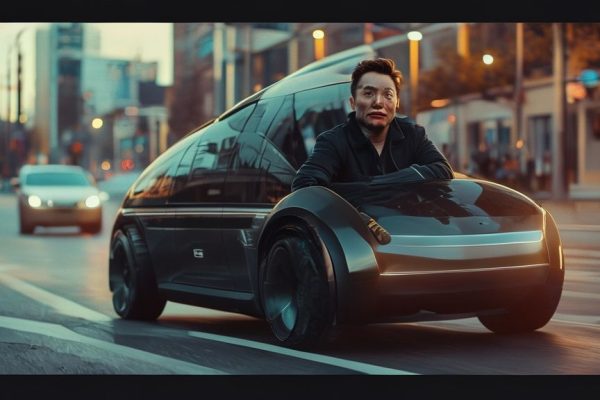
Milestone Achieved, but Challenges Lie Ahead
Elon Musk’s ambitious goal of revolutionizing transportation with unsupervised robotaxis has taken a significant step forward. The recent announcement has sent shockwaves through the industry, leaving many to wonder what this means for the future of autonomous vehicles. While the tech mogul celebrated this milestone, concerns arise about the feasibility of making these robotaxis available to the public in the immediate future.
Background and Context
The development of autonomous vehicles has been a long-standing goal for tech companies, with many investing heavily in research and development. Tesla, under Elon Musk’s leadership, has been at the forefront of this innovation. The company’s Autopilot system has been widely regarded as one of the most advanced driver-assistance systems on the market. However, the leap from assisted driving to fully autonomous driving is a significant one, and many experts have questioned the feasibility of achieving this in the near term.
Technical Challenges and Regulatory Hurdles
While Tesla has made significant progress in developing its Autopilot system, there are still numerous technical challenges that need to be addressed before unsupervised robotaxis can become a reality. These include ensuring the system can handle complex scenarios such as construction zones, pedestrian crossings, and inclement weather conditions. Moreover, regulatory hurdles must be overcome, as many countries are still in the process of establishing guidelines for the deployment of autonomous vehicles.
- The technical challenges of developing a fully autonomous system capable of handling complex scenarios.
- The regulatory hurdles that must be overcome before unsupervised robotaxis can be deployed.
- The need for significant investment in infrastructure and education to support the widespread adoption of autonomous vehicles.
Future Implications and Opportunities
The development of unsupervised robotaxis has far-reaching implications for the transportation industry. On the one hand, it has the potential to revolutionize the way we travel, making transportation safer, more efficient, and more accessible. On the other hand, it raises concerns about job displacement, cybersecurity risks, and the need for significant investment in infrastructure and education.
As the industry continues to evolve, it will be interesting to see how companies like Tesla navigate these challenges and opportunities. One thing is certain, however – the future of transportation will be shaped by the development of autonomous vehicles, and Elon Musk’s unsupervised robotaxis milestone is just the beginning.
What’s Next?
While the immediate future of unsupervised robotaxis may be uncertain, one thing is clear – the development of autonomous vehicles is an ongoing process. As companies continue to invest in research and development, we can expect to see significant advancements in the years to come. Whether it’s the widespread adoption of robotaxis or the development of new technologies, the future of transportation is exciting and uncertain.





Leave a Reply