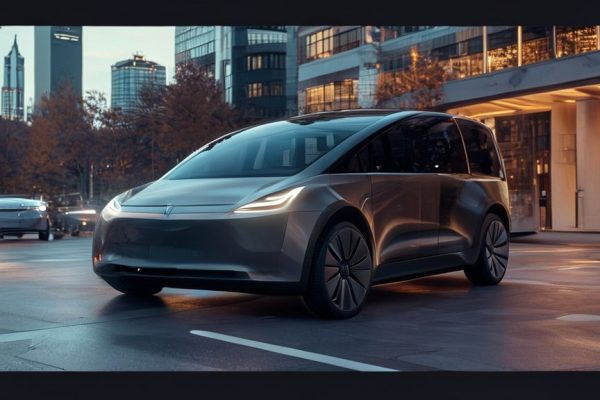
Tesla Takes a Giant Leap into Autonomous Transportation
In a significant milestone, Tesla has successfully unveiled its unsupervised robotaxis, marking a major step towards realizing the company’s vision of autonomous transportation. The announcement, made by Elon Musk, has sparked both excitement and skepticism among experts and enthusiasts alike. While the achievement is a testament to Tesla’s technological prowess, several challenges lie ahead before the robotaxis can become a reality for the masses.
Background and Context
Tesla’s foray into autonomous transportation began several years ago, with the company investing heavily in developing the necessary software and hardware. The robotaxis, which will be an extension of the existing Tesla fleet, aims to revolutionize the way people travel. By leveraging advanced sensors, AI algorithms, and machine learning, Tesla’s robotaxis will be able to navigate complex roads and traffic conditions without human intervention.
However, the journey to widespread adoption of autonomous transportation is fraught with challenges. Regulatory frameworks, safety concerns, and public acceptance are just a few of the hurdles that need to be overcome. While some countries have begun to establish guidelines for the development and deployment of autonomous vehicles, the regulatory landscape is still in its infancy.
Key Challenges Ahead
- Regulatory Frameworks: Governments around the world need to establish clear guidelines and regulations for the development, testing, and deployment of autonomous vehicles. This includes defining liability, safety standards, and data protection protocols.
- Safety Concerns: Proponents of autonomous transportation argue that self-driving cars are safer than human-driven vehicles, as they can detect and respond to hazards more quickly. However, the technology is not yet foolproof, and safety concerns persist.
- The widespread adoption of autonomous transportation will depend on public acceptance. Many people are still wary of relying on technology to get them from point A to point B, and concerns about job displacement and cybersecurity are valid.
- Infrastructure and Data: Autonomous vehicles require a vast amount of data to operate effectively. This includes high-definition maps, sensor data, and real-time traffic information. However, the collection and sharing of this data raise concerns about data protection and ownership.
Future Implications
The successful deployment of Tesla’s robotaxis has the potential to transform the way people travel. Imagine a world where you can summon a self-driving car with the touch of a button, and it takes you to your destination without the need for human intervention. However, the challenges ahead are significant, and it’s unclear when or if the robotaxis will become a reality for the masses.
Tesla’s announcement has sparked a renewed debate about the future of transportation. While some see the robotaxis as a revolutionary technology, others are more skeptical. As the world watches Tesla navigate the challenges ahead, one thing is certain – the future of transportation will be shaped by the success or failure of autonomous technologies like the robotaxis.
Only time will tell if Tesla’s robotaxis will be able to overcome the challenges ahead and become a mainstream mode of transportation. One thing is certain, however – the journey ahead will be exciting, and the potential rewards are substantial.





Leave a Reply