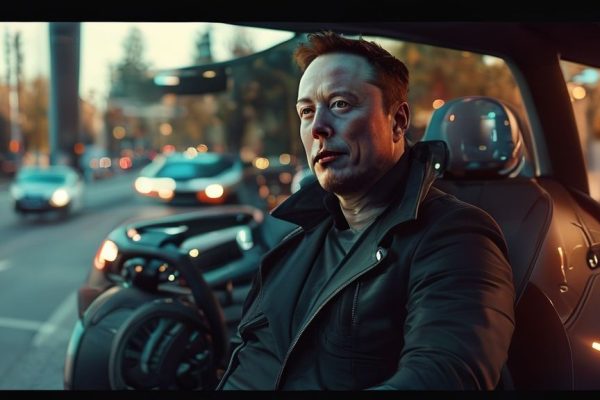
Main Event: Unsuspected Robotaxis Milestone
Elon Musk, the visionary CEO of Tesla, has achieved yet another groundbreaking milestone in the world of autonomous driving technology. The electric vehicle giant has successfully unveiled its unsupervised robotaxis, a significant step towards making self-driving cars a reality. However, the excitement surrounding this achievement is tempered by concerns over the immediate feasibility of this technology.
The unsupervised robotaxis, which is an extension of Tesla’s Autopilot system, has been in development for several years. The technology relies on a combination of cameras, sensors, and sophisticated software to navigate roads and make decisions without human intervention. Musk’s tweet celebrating this milestone has sparked widespread interest, but it remains unclear how many people will be able to ride in these robotaxis in the immediate future.
Background and Context
Tesla’s journey towards autonomous driving began in 2015 with the introduction of Autopilot, a semi-autonomous system that enabled vehicles to steer, accelerate, and brake on their own. Since then, the company has made significant strides in refining this technology, including the development of Full Self-Driving (FSD) capabilities.
The unsupervised robotaxis takes this technology to the next level, allowing cars to operate without human oversight in certain situations. However, this advancement also raises concerns about safety, liability, and regulatory frameworks.
Experts have highlighted the importance of addressing these issues before unsupervised robotaxis can become a reality. ‘The regulatory environment is still evolving, and there are many uncertainties surrounding the deployment of autonomous vehicles,’ said John Krafcik, CEO of Waymo, a leading autonomous driving company. ‘We need to ensure that we have a robust framework in place to ensure public safety and confidence.’
Future Implications and Challenges
The widespread adoption of unsupervised robotaxis has the potential to revolutionize the transportation industry, reducing accidents, congestion, and emissions. However, there are also challenges to be overcome, including the need for significant investment in infrastructure and the development of robust cybersecurity measures.
According to a report by the International Transport Forum, the widespread adoption of autonomous vehicles could lead to a 90% reduction in road accidents. However, this vision is still in its infancy, and many technical, regulatory, and societal hurdles need to be addressed.
Tesla’s unsupervised robotaxis may be a significant step towards making this vision a reality, but it also highlights the complex challenges that lie ahead. As Musk himself noted, ‘We’re not just building cars, we’re building a transportation system that will transform the way we live and work.’
- The development of unsupervised robotaxis is a significant milestone in the journey towards autonomous driving.
- However, there are concerns about safety, liability, and regulatory frameworks surrounding this technology.
- The widespread adoption of autonomous vehicles has the potential to revolutionize the transportation industry.
As the world continues to navigate the complex landscape of autonomous driving, one thing is clear: the future of transportation will be shaped by the innovations and decisions made today.





Leave a Reply