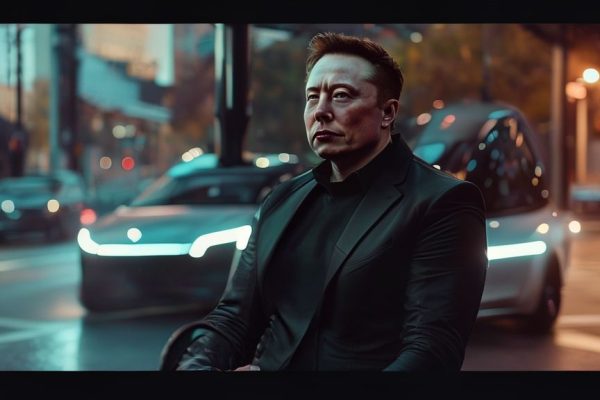
Elon Musk’s Ambitious Plan for Autonomous Transportation
Elon Musk has made headlines once again with the announcement of unsupervised Tesla robotaxis, a major milestone in the development of autonomous transportation. The move marks a significant step towards making electric vehicles not only environmentally friendly but also highly advanced and convenient. However, experts and enthusiasts alike are left wondering how many people will be able to hop into these self-driving cars in the immediate future.
Background and Context
The concept of autonomous vehicles has been gaining traction for over a decade, with numerous companies investing heavily in research and development. Tesla, under Musk’s leadership, has been at the forefront of this movement, consistently pushing the boundaries of what is possible with electric and self-driving cars. The company’s Full Self-Driving (FSD) technology has been in the works for several years and has shown promising results in various tests.
The unsupervised robotaxis announcement is a significant expansion of Tesla’s FSD capabilities, allowing the cars to operate without human intervention in certain conditions. While this is a major breakthrough, it also raises important questions about safety, liability, and regulatory compliance. As the technology becomes more advanced, it will be crucial to address these concerns to ensure widespread adoption.
Technical Details and Challenges
Tesla’s FSD system relies on a combination of sensors, cameras, and machine learning algorithms to navigate roads and avoid obstacles. However, creating a truly unsupervised robotaxi requires solving complex technical challenges, such as:
- Edge cases: Handling unusual or unexpected situations, such as a pedestrian stepping into the road or a car cutting off the robotaxi.
- Liability: Determining who is responsible in the event of an accident involving an unsupervised robotaxi.
- Regulatory compliance: Ensuring that the technology meets or exceeds existing safety and regulatory standards.
- Scalability: Developing a system that can be deployed and managed at a large scale, with millions of potential users.
Musk has consistently emphasized the importance of human safety and has pledged to make FSD a reality. However, the timeline for widespread adoption remains uncertain. Some experts predict that it could take several years for the technology to become reliable and widespread, while others believe that it may never reach a point where it is safe for widespread use.
Future Implications and Potential Benefits
{
“title”: “Elon Musk Announces Unsupervised Tesla Robotaxis, But Questions Remain”,
“content”: “
Elon Musk’s Ambitious Plan for Autonomous Transportation
Elon Musk has made headlines once again with the announcement of unsupervised Tesla robotaxis, a major milestone in the development of autonomous transportation. The move marks a significant step towards making electric vehicles not only environmentally friendly but also highly advanced and convenient. However, experts and enthusiasts alike are left wondering how many people will be able to hop into these self-driving cars in the immediate future.
Background and Context
The concept of autonomous vehicles has been gaining traction for over a decade, with numerous companies investing heavily in research and development. Tesla, under Musk’s leadership, has been at the forefront of this movement, consistently pushing the boundaries of what is possible with electric and self-driving cars. The company’s Full Self-Driving (FSD) technology has been in the works for several years and has shown promising results in various tests.
The unsupervised robotaxis announcement is a significant expansion of Tesla’s FSD capabilities, allowing the cars to operate without human intervention in certain conditions. While this is a major breakthrough, it also raises important questions about safety, liability, and regulatory compliance. As the technology becomes more advanced, it will be crucial to address these concerns to ensure widespread adoption.
Technical Details and Challenges
Tesla’s FSD system relies on a combination of sensors, cameras, and machine learning algorithms to navigate roads and avoid obstacles. However, creating a truly unsupervised robotaxi requires solving complex technical challenges, such as:
- Edge cases: Handling unusual or unexpected situations, such as a pedestrian stepping into the road or a car cutting off the robotaxi.
- Liability: Determining who is responsible in the event of an accident involving an unsupervised robotaxi.
- Regulatory compliance: Ensuring that the technology meets or exceeds existing safety and regulatory standards.
- Scalability: Developing a system that can be deployed and managed at a large scale, with millions of potential users.
Musk has consistently emphasized the importance of human safety and has pledged to make FSD a reality. However, the timeline for widespread adoption remains uncertain. Some experts predict that it could take several years for the technology to become reliable and widespread, while others believe that it may never reach a point where it is safe for widespread use.
Future Implications and Potential Benefits
Despite the challenges, the potential benefits of unsupervised robotaxis are significant. With the ability to operate without human intervention, these vehicles could revolutionize the way we think about transportation. They could:
- Improve safety: By reducing the likelihood of human error, unsupervised robotaxis could lead to a significant reduction in accidents and fatalities.
- Enhance mobility: For the elderly, disabled, or those who cannot drive, unsupervised robotaxis could provide a new level of independence and freedom.
- Increase productivity: With the ability to work or relax during their commute, people could make the most of their time and increase their productivity.
- Reduce congestion: By optimizing traffic flow and reducing the number of cars on the road, unsupervised robotaxis could help alleviate congestion and reduce travel times.
As the world continues to evolve and technology advances, it will be exciting to see how unsupervised robotaxis shape the future of transportation. While there are still many challenges to overcome, the potential benefits are undeniable. One thing is certain: the future of transportation is here, and it’s electric.
Conclusion
The announcement of unsupervised Tesla robotaxis marks a significant milestone in the development of autonomous transportation. While there are still many challenges to overcome, the potential benefits are significant. As the technology continues to evolve, it will be exciting to see how it shapes the future of transportation. One thing is certain: the future is electric, and it’s coming sooner than you think.
In the coming years, we can expect to see more advancements in autonomous transportation, with companies like Waymo, Cruise, and Argo AI competing with Tesla to create the safest and most efficient self-driving cars. As the industry continues to evolve, it will be crucial to address the challenges and concerns surrounding unsupervised robotaxis. With the potential benefits of improved safety, enhanced mobility, increased productivity, and reduced congestion, it’s an exciting time to be alive.
The future of transportation is here, and it’s full steam ahead. Buckle up, because the ride is about to get a lot smoother.





Leave a Reply