Tesla’s Unsupervised Robotaxis: A Game-Changer or a Recipe for Disaster?
Tesla’s recent achievement of successfully testing its unsupervised robotaxis has sent shockwaves throughout the tech industry. CEO Elon Musk took to social media to celebrate this milestone, but the question remains: how many people will actually be able to ride in these vehicles in the immediate future?
The Background and Context
Tesla has been working towards developing autonomous vehicles for several years, with a focus on creating a fully autonomous driving system. The company’s Autopilot feature has been available in its vehicles since 2015, allowing drivers to semi-autonomously navigate roads. However, the latest achievement marks a significant step towards fully autonomous vehicles, where humans are not required in the driver’s seat.
The unsupervised robotaxis are equipped with advanced sensors and AI algorithms that enable them to navigate through complex traffic scenarios, recognize and respond to road signs, and even make decisions in emergency situations. While the technology is impressive, there are several challenges that need to be addressed before these vehicles can become a reality.
The Challenges Ahead
One of the major concerns surrounding unsupervised robotaxis is the issue of liability. If an accident occurs while a human is not in the driver’s seat, who is responsible? The manufacturer, the owner, or the passenger? This question needs to be answered before these vehicles can gain widespread acceptance.
Another challenge is the issue of regulation. Governments around the world are still grappling with the implications of autonomous vehicles, and there is a pressing need for clear guidelines and regulations to ensure public safety.
Additionally, there are concerns about the cybersecurity of these vehicles. As they become increasingly dependent on software and connectivity, the risk of hacking and cyber attacks increases. This could have serious consequences, including loss of life and property damage.
The Future Implications
Despite the challenges, the potential benefits of unsupervised robotaxis are enormous. They could revolutionize the way we travel, making it safer, more efficient, and more convenient. They could also enable people with disabilities to travel independently, and reduce the number of accidents caused by human error.
However, it’s essential to address the challenges ahead and ensure that these vehicles are developed and deployed responsibly. This requires a collaborative effort from governments, manufacturers, and regulatory bodies to create a framework that balances innovation with public safety.
As Tesla continues to push the boundaries of autonomous driving, we can expect to see significant advancements in the coming years. But for now, the question remains: can unsupervised robotaxis become a reality, or are they still a dream of the future?
Key Points to Consider:
- Tesla’s unsupervised robotaxis have successfully completed a test run, marking a significant milestone in autonomous driving.
- The technology is impressive, but several challenges need to be addressed before these vehicles can become a reality.
- The issue of liability, regulation, and cybersecurity are pressing concerns that need to be addressed.
- The potential benefits of unsupervised robotaxis are enormous, but they require responsible development and deployment.
As we look to the future, it’s essential to strike a balance between innovation and public safety. With the right approach, unsupervised robotaxis could revolutionize the way we travel and transform our communities.
Image Prompt:
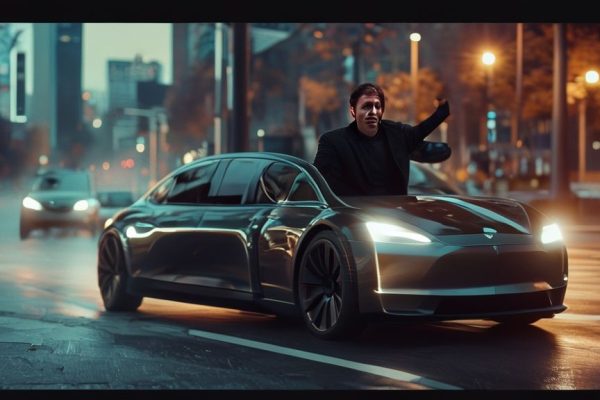
An image of a Tesla robotaxi driving down a busy city street, with a human passenger on board. The car is equipped with advanced sensors and AI algorithms, and is navigating through complex traffic scenarios with ease. In the background, a cityscape with towering skyscrapers and bustling streets, symbolizing the potential of autonomous vehicles to transform urban transportation.






Leave a Reply