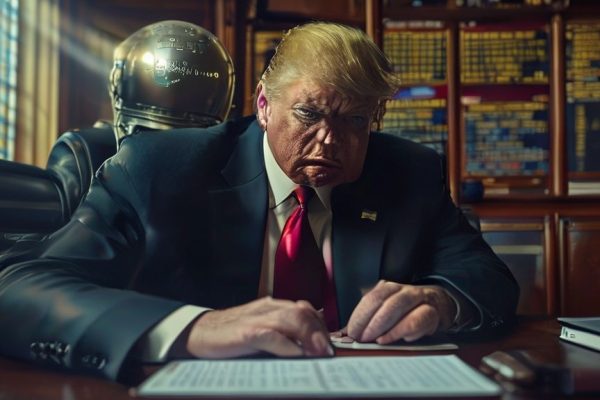
AI-Powered Regulations: A New Frontier in Governance
The Trump administration’s plan to utilize artificial intelligence in writing federal transportation regulations has sparked concerns about transparency and accountability in the governance process. ProPublica recently reported that the U.S. Department of Transportation is exploring the use of AI to generate these regulations, potentially altering the way policies are created and enforced.
Background and Context
The use of AI in governance is not a new concept. Several governments around the world have already begun incorporating AI-powered tools into their policy-making processes. However, the Trump administration’s plan to leverage AI in writing federal regulations is unprecedented and raises questions about the potential consequences on the democratic process.
The U.S. Department of Transportation has been at the forefront of exploring the use of AI in transportation policy-making. The department has been working with private companies to develop AI-powered tools that can analyze data, identify trends, and provide recommendations on policy changes. While the goal is to streamline the policy-making process and increase efficiency, critics argue that the use of AI in writing regulations undermines the transparency and accountability that are essential to democratic governance.
Concerns about Transparency and Accountability
The use of AI in writing federal regulations raises several concerns about transparency and accountability. Firstly, AI-generated regulations may not be subject to the same level of scrutiny and debate as human-written regulations. This could lead to policies being implemented without adequate public input or oversight, potentially affecting the lives of millions of Americans.
Secondly, AI-generated regulations may be biased towards certain interests or groups, potentially perpetuating existing inequalities. For instance, AI algorithms may be programmed to prioritize the interests of corporate donors or special interest groups over those of marginalized communities.
Lastly, the use of AI in writing regulations may exacerbate the existing problem of regulatory capture, where special interest groups influence policy-making to serve their own interests. This could lead to policies that benefit a select few at the expense of the broader public.
Future Implications and Recommendations
The implications of the Trump administration’s plan to use AI in writing federal transportation regulations are far-reaching and require careful consideration. As AI technology continues to evolve, it is essential to ensure that its use in governance is transparent, accountable, and subject to public scrutiny.
Recommendations for the Trump administration include:
- Establishing clear guidelines and standards for the use of AI in writing regulations.
- Ensuring that AI-generated regulations are subject to public input and oversight.
- Implementing measures to prevent regulatory capture and ensure that policies serve the public interest.
- Providing training and education for policymakers on the use and limitations of AI in governance.
The use of AI in writing federal regulations is a complex issue that requires a nuanced approach. While AI technology has the potential to increase efficiency and streamline policy-making, it is essential to ensure that its use is transparent, accountable, and subject to public scrutiny.
In conclusion, the Trump administration’s plan to use AI in writing federal transportation regulations raises concerns about transparency and accountability in the governance process. As AI technology continues to evolve, it is essential to establish clear guidelines, ensure public input, and prevent regulatory capture to ensure that policies serve the public interest.
Image Prompt: An AI-generated image of a computer screen displaying a draft of a federal regulation, with a red ‘X’ symbol overlaid on top to represent the need for human oversight and accountability.






Leave a Reply