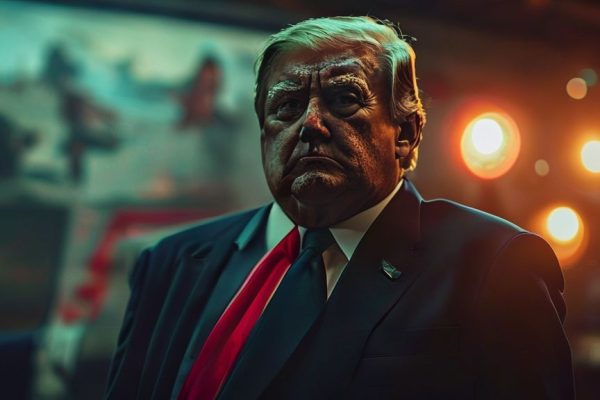
A New Era of Global Politics
The capture of Venezuelan President Nicolás Maduro by Donald Trump, although hypothetical for the sake of this article, has sparked a wave of discussion on the changing landscape of global politics. The concept of international relations is no longer governed by traditional norms and alliances. Instead, we are witnessing a new era, where power dynamics are shifting, and geopolitics are becoming increasingly complex.
The Rise of Great Power Competition
In recent years, the world has witnessed a significant increase in great power competition between nations. The United States, China, Russia, and other major powers are vying for influence and control in various regions. This competition has led to a resurgence of tensions, conflicts, and proxy wars. The concept of a multipolar world order, where multiple powers share influence, is becoming a reality.
One of the primary drivers of this shift is the decline of the United States’ unipolar dominance. The 2008 global financial crisis, the rise of China, and the increasing assertiveness of Russia have all contributed to the erosion of American primacy. As a result, other nations are seeking to fill the power vacuum and assert their own interests.
The Impact of Global Turmoil on International Relations
The consequences of this shift are far-reaching and profound. International relations are becoming increasingly fragmented, and traditional alliances are being tested. The rise of nationalism and protectionism is also contributing to the breakdown of global governance and cooperation. The World Trade Organization, the International Monetary Fund, and other international institutions are facing significant challenges in their ability to promote stability and cooperation.
The shift in global politics also has significant implications for economic growth, security, and human rights. As nations become increasingly isolated and protectionist, trade and investment are suffering. The breakdown of global governance also raises concerns about the ability of nations to address global challenges, such as climate change, pandemics, and nuclear proliferation.
Furthermore, the rise of great power competition is also contributing to the increasing militarization of international relations. Nations are investing heavily in their military capabilities, and tensions between great powers are running high. The risk of miscalculation and conflict is increasing, and the international community is facing a daunting challenge in maintaining peace and stability.
Conclusion
In conclusion, the shift in global politics is a complex and multifaceted phenomenon. It is driven by a combination of factors, including the rise of great power competition, the decline of the United States’ unipolar dominance, and the increasing assertiveness of other nations. The consequences of this shift are far-reaching and profound, and the international community must work together to address the challenges that lie ahead.
To navigate this new era of global politics, nations must adopt a more nuanced and cooperative approach to international relations. This includes strengthening international institutions, promoting multilateral cooperation, and addressing the root causes of global challenges. Only through a collective effort can we hope to maintain peace, stability, and prosperity in an increasingly complex and turbulent world.
- The shift in global politics is driven by a combination of factors, including great power competition and the decline of American primacy.
- The consequences of this shift are far-reaching and profound, including the breakdown of global governance, the erosion of international cooperation, and the increasing militarization of international relations.
- Nations must adopt a more nuanced and cooperative approach to international relations to address the challenges that lie ahead.





Leave a Reply