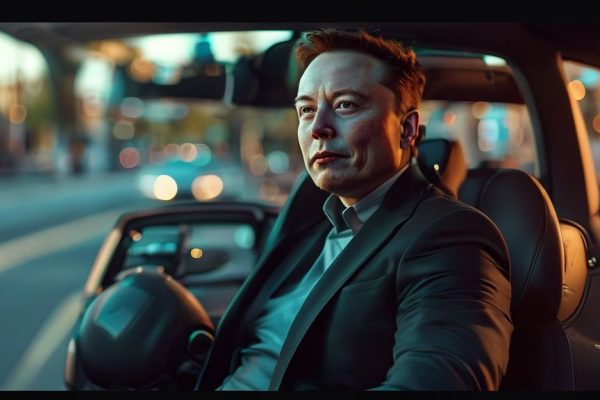
Elon Musk’s Unsupervised Robotaxis: A Game-Changer in Autonomous Transportation?
Elon Musk, the visionary CEO of Tesla, has been at the forefront of autonomous driving technology for several years. Recently, he announced a significant milestone in the company’s push for self-driving cars: unsupervised robotaxis. This breakthrough has the potential to revolutionize the transportation industry, but it also raises important questions about safety, regulation, and public adoption.
The Rise of Autonomous Transportation
Autonomous vehicles have been in development for over a decade, but recent advancements in artificial intelligence, computer vision, and sensor technology have brought us closer to a future where self-driving cars are the norm. Tesla’s Autopilot system has been one of the most advanced and widely used autonomous driving systems on the market, with millions of miles driven without human intervention.
The development of unsupervised robotaxis takes this technology to the next level. With the ability to operate without human supervision, these vehicles have the potential to transform the way we travel, particularly in urban areas where traffic congestion is a major issue.
The Benefits of Unsupervised Robotaxis
So, what are the benefits of unsupervised robotaxis? For one, they have the potential to greatly reduce traffic congestion and accidents. According to the National Highway Traffic Safety Administration (NHTSA), there were over 36,000 fatalities in motor vehicle crashes in the United States in 2020. Autonomous vehicles, including unsupervised robotaxis, have the potential to significantly reduce these numbers.
Another benefit of unsupervised robotaxis is increased mobility for the elderly and disabled. With the ability to hail a ride without having to physically interact with the vehicle, these individuals will have greater freedom to move around their communities.
Finally, unsupervised robotaxis have the potential to significantly reduce parking demands in urban areas. With vehicles able to drive themselves to parking garages and lots, the need for on-street parking will decrease, freeing up valuable real estate for other uses.
Challenges and Concerns
While the benefits of unsupervised robotaxis are clear, there are also several challenges and concerns that need to be addressed. One of the biggest concerns is safety. While Tesla’s Autopilot system has a strong safety record, there is still a risk of accidents occurring, particularly in edge cases such as construction zones or inclement weather.
Another challenge is regulation. As autonomous vehicles become more widespread, governments will need to develop new laws and regulations to govern their use. This will require a coordinated effort between industry stakeholders, regulators, and lawmakers.
Finally, there are concerns about public adoption. While many people are excited about the prospect of autonomous vehicles, others are skeptical or even fearful. Educating the public about the benefits and limitations of unsupervised robotaxis will be crucial to their widespread adoption.
The Future of Unsupervised Robotaxis
So, what does the future hold for unsupervised robotaxis? Elon Musk has stated that Tesla plans to launch its robotaxi service in several cities in 2023, with a focus on areas with high demand for transportation. The company has also announced plans to partner with ride-hailing services to offer its robotaxis as a transportation option.
As the technology continues to evolve, we can expect to see more widespread adoption of unsupervised robotaxis. This will require continued investment in research and development, as well as collaboration between industry stakeholders and regulators.
In conclusion, Elon Musk’s unsupervised robotaxis represent a significant milestone in the development of autonomous transportation. With the potential to transform the way we travel, these vehicles will require careful consideration of the benefits and challenges they present. As we move forward, it will be essential to prioritize safety, regulation, and public education to ensure a smooth transition to a future with unsupervised robotaxis.
**Key points to consider:**
* Unsupervised robotaxis have the potential to greatly reduce traffic congestion and accidents
* They can increase mobility for the elderly and disabled
* They can reduce parking demands in urban areas
* Safety, regulation, and public adoption are key concerns
* Tesla plans to launch its robotaxi service in several cities in 2023
* The company will partner with ride-hailing services to offer its robotaxis as a transportation option
**Image prompt:** A futuristic cityscape with a Tesla robotaxi driving down the main street, with a sleek and modern design. The robotaxi is filled with passengers, all of whom are engaged in various activities such as reading books or working on laptops. The sky above is a bright blue, with a few clouds scattered about. The overall mood is one of excitement and possibility, as the city of the future comes alive.





Leave a Reply