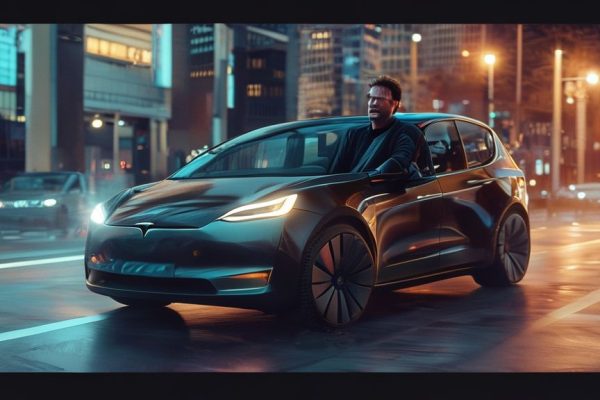
Elon Musk Hails a New Era in Autonomous Transportation
Tesla’s recent announcement has sent shockwaves throughout the tech and automotive industries, with CEO Elon Musk celebrating a major milestone in the development of unsupervised robotaxis. The achievement marks a significant breakthrough in autonomous transportation, but questions linger about the practical implications for the general public.
A Closer Look at the Technology
Tesla’s robotaxis, also known as Full Self-Driving (FSD) technology, has been in development for several years. The system uses a combination of sensors, mapping data, and machine learning algorithms to enable vehicles to navigate roads and highways without human intervention. While still in its experimental phase, FSD has demonstrated impressive capabilities in controlled environments.
However, the complexities of real-world scenarios, such as inclement weather, construction zones, and pedestrian behavior, pose significant challenges for the technology. Critics argue that the lack of transparency and regulatory oversight has raised concerns about the safety and reliability of FSD.
What Does This Mean for the Public?
Elon Musk has been vocal about his ambition to revolutionize transportation with autonomous vehicles. However, the immediate prospect of riding in unsupervised robotaxis remains uncertain. Regulatory hurdles, public acceptance, and technical limitations will need to be addressed before this technology becomes a mainstream reality.
While some experts predict that autonomous robotaxis will transform the way we travel, others caution against premature optimism. The transition to autonomous transportation will require significant investments in infrastructure, education, and policy updates. Moreover, the social and economic implications of widespread automation will need to be carefully considered.
Key points to consider:
- Regulatory frameworks: Existing laws and regulations will need to be adapted to accommodate autonomous vehicles.
- Safety and liability: Questions surrounding liability and safety will need to be addressed before widespread adoption.
- Public acceptance: Gaining public trust and acceptance will be crucial for the success of autonomous transportation.
- Infrastructure investments: Significant investments will be required to upgrade infrastructure to support autonomous vehicles.
A Glimpse into the Future of Transportation
The development of autonomous robotaxis marks a significant step towards a future where transportation is faster, safer, and more efficient. While challenges lie ahead, the potential benefits of this technology are undeniable. As the transportation landscape continues to evolve, one thing is certain: the future of mobility will be shaped by innovative technologies like FSD.
Tesla’s breakthrough in autonomous transportation is a testament to the company’s commitment to pushing the boundaries of what is possible. As the industry continues to advance, we can expect to see significant improvements in safety, efficiency, and user experience. The question remains: what will the future of transportation look like, and how will we get there?
Image prompt: A futuristic cityscape with a Tesla robotaxi navigating through the streets, surrounded by pedestrians and other vehicles, with a cityscape in the background and a bright blue sky with fluffy white clouds.





Leave a Reply