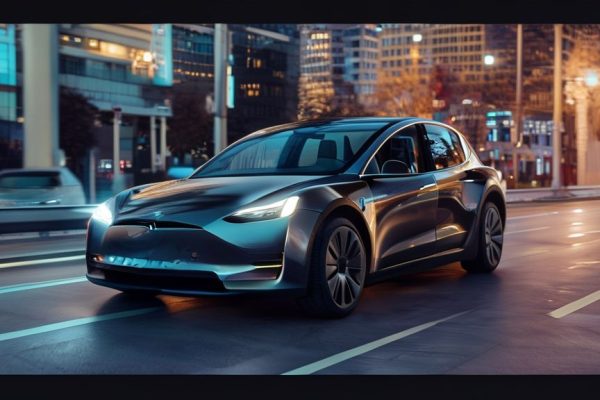
Historic Achievement in Autonomous Technology
Tesla has finally achieved a long-awaited milestone in its Autopilot technology, allowing its robotaxis to operate without human supervision. The news comes as a significant breakthrough in the development of self-driving cars, sparking both excitement and concern among experts and consumers alike.
Elon Musk, the CEO of Tesla, celebrated this achievement on social media, but it remains unclear how many people will be able to ride in Tesla’s unsupervised robotaxis in the immediate future. The company has been working tirelessly to perfect its Autopilot technology, which has been in development for several years.
Background and Context of Autopilot Development
Tesla’s Autopilot technology has been a game-changer in the automotive industry, allowing cars to navigate roads and highways with ease. However, the technology has not been without its challenges. In the past, there have been instances of Autopilot malfunctioning, leading to accidents and fatalities. These incidents have raised questions about the safety and reliability of self-driving cars.
Despite these setbacks, Tesla has continued to push the boundaries of autonomous technology. The company has invested heavily in research and development, hiring top talent from around the world to work on its Autopilot project. The result is a technology that is not only sophisticated but also increasingly safe and efficient.
Implications of Unsupervised Robotaxis
The implications of unsupervised robotaxis are far-reaching and multifaceted. On the one hand, the technology has the potential to revolutionize the way we travel, making it safer, faster, and more convenient. On the other hand, there are concerns about job displacement, cybersecurity risks, and liability.
As the first company to achieve unsupervised robotaxis, Tesla is likely to face intense scrutiny from regulators, lawmakers, and consumers. The company will need to demonstrate that its technology is safe and reliable, and that it has taken adequate measures to mitigate potential risks.
- Key Benefits of Unsupervised Robotaxis:
- Increased safety: With no human driver, the risk of accidents caused by human error is significantly reduced.
- Increased efficiency: Self-driving cars can navigate roads and highways more efficiently than human drivers, reducing congestion and decreasing travel times.
- Increased convenience: Unsupervised robotaxis can operate 24/7, making it easier for people to get around without relying on human drivers.
- Key Challenges of Unsupervised Robotaxis:
- Job displacement: As self-driving cars become more widespread, there is a risk that human drivers will lose their jobs.
- Cybersecurity risks: Self-driving cars are vulnerable to cyber threats, which could compromise their safety and reliability.
- Liability: In the event of an accident, who will be liable – the car manufacturer, the software developer, or the passenger?
Future Implications and Next Steps
The achievement of unsupervised robotaxis by Tesla marks a significant milestone in the development of self-driving cars. As the company continues to refine its technology, we can expect to see widespread adoption of self-driving cars in the coming years.
However, the future is not without its challenges. As self-driving cars become more widespread, we can expect to see increased scrutiny from regulators, lawmakers, and consumers. Tesla will need to demonstrate that its technology is safe and reliable, and that it has taken adequate measures to mitigate potential risks.
The next step for Tesla will be to roll out its unsupervised robotaxis to a wider audience, starting with select cities and regions. The company will also need to continue investing in research and development, hiring top talent, and refining its technology to ensure that it remains at the forefront of the autonomous vehicle industry.
As we move forward, it is essential to consider the broader implications of self-driving cars on society. How will they change the way we travel? Will they lead to increased mobility for the elderly and disabled? Will they reduce congestion and pollution in urban areas?
The answers to these questions will depend on how effectively we can balance the benefits and challenges of self-driving cars. As we navigate this complex landscape, it is essential to prioritize safety, reliability, and accountability.






Leave a Reply